Search This Blog

Showing posts with label Boot Hill. Show all posts

Saturday, June 4, 2016

Timber Ridge – My Northern-Style Old West Town for Warhammer Legends of the Old West & More


WIP 28mm western town for wargaming or reolpalying games
The Old West town of Timber Ridge underway
 

I’ve embarked on the creation of a Western town for such games as Warhammer Historical – Legends of the Old West, my game Hurled into Eternity, and perhaps even Boot Hill.

Unlike most towns people have created out there on the web, this one is not set in the American Southwest, but rather in more northerly climes. (As an aside, I love the movie Tombstone but I wanted a look and feel that was something different for an Old West town.)

A major inspiration for this is one of my favorite movies of all time: Unforgiven.

I’ve only just started on the town itself, so there is not much to show just yet. I anticipate with the pace I’m going at that I’ll complete it by the fall of this year, but we’ll see what happens.

Thus, the start of the town of Timber Ridge, a logging encampment, but full of cut-throats, desperadoes, and gunmen!


Wednesday, August 20, 2014

Western gunslingers, Boot Hill style, circa 1983


That's minis that is...
On a lark I ran across a "VultureBay" auction for some vintage minis, vintage as in 1983 Boot Hill miniatures. For $3.50 I figured what the Hell and I ponied up and snagged them. A few days later they arrive.

Minis in Boot Hill makes perfect sense when one considers that Boot Hill 1st and 2nd edition are what I call "a miniatures battle game with a skeletal RPG system attached".  That's no knock against Boot Hill, I like it immensely as a system. So much so in fact Boot Hill lead me to create my own western RPG, Hurled into Eternity. Of course the fact that it is a skeletal RPG is the reason I created my own from whole cloth, rather then retrofit to Boot Hill.

I can't really recall seeing these guys on the shelf back in the day in gaming stores, but then again I wasn't really looking for them either, I was looking for Warhammer minis by the time I really became interested in the miniature aspect of the hobby.

I figured it was finally time to let the boys out..
Anyways, here is what I got in the haul: all in all very nice and in the blister too. Think about it, much like Stinky Pete in Toy Story 2 these guys have been in the box for quite some time, in their case for 31 years... So what did I do when I got them? Cut them out of the blister of course. An interesting thing about these minis is the fact that they came out in 1983. By this time (although we didn't know it) Boot Hill was in or near its near hibernation phase. Sure BH4 and BH5 would come out, and later 3rd edition Boot Hill, but it was closer to its run then the beginning.

In terms of scale they seem to be about 22mm. They are not as small as 20mm, but certainly not 28mm "heroic scale". The 28mm "heroic scale" Note: Warhammer minis will look absolutely huge next to these guys. They are inline with the scale of Ral Partha minis which were the big player back in the early 80s (most of our early D&D games when we used minis utilized Ral Partha minis unpainted or "somewhat" painted".)

Adventure squares?
The pack has three gun fighters; one is a clearly a gunslinger getting ready to draw, the second wields a rifle up level firing and the last is what looks to be a cowhand firing; also looks like he's wearing a sombrero. It also looks like he has a confederate style shirt with buttons down either side rather then the middle.

A few period appropriate minis for scale.
Another look at scale: the three gunslingers, a 2nd edition samurai warrior from Games Workshop and a 3rd edition samurai, likewise from GW. The gunslingers are close to their contemporary the 2nd edition samurai but a bit smaller then the 3rd edition one.

Lastly, as noted by the graphic to the right the back had "adventure squares"? They are the right scale so cut it out and bamm indoor dueling range!

In any event, I like them and will probably be painting them up to use for testing for Hurled into Eternity.

Friday, June 27, 2014

Review of the Boot Hill Module BH4- Burned Bush Wells

BH4- Burned Bush Wells
The 4th module of the Boot Hill series certainly has a weird name, at least to me that is. Much like the other Boot Hill modules I did not play Boot Hill back in the day as we were not into Westerns at that time (a shame) and most of our time was spent playing D&D and AD&D. For my own part I used to watch a lot of westerns with my father, but drifted away. A few years back I started watching them again and got hooked on Boot Hill. In any event BH4- Burned Bush Wells is a module produced by Jeff Grubb with some input from Allen Hammock and Brian Blume. 

BH4- Burned Bush Wells is a "later" Boot Hill module. I say "latter" in that the graphic design has changed compared to the earlier modules and its apparent that at the time TSR was focusing on D&D and AD&D, specifically as their bread winners. Perhaps the power struggle at the time of the mid 80s also accounted for this. Perhaps there were not enough folks that were that interested in working on the line, Donald Kaye's untimely death not helping matters in terms of Boot Hill overall? Just speculation on my part. In any event it would be the second to last Boot Hill module and akin to the others before it. Weird to think that it was released in 1983, with only Range War to follow in 1984. From BH1- Mad Mesa to Range Wars it was span of 1981-1984 for the entire run of modules.

The cover and interior art
Elmore seems to be a polarizing figure for grognards in terms of TSR era art. In the realm of Boot Hill (and others) I think his stuff is very good and it certain captures the feel well, certainly for a western RPG. Another thing to think about: the American West isn't usually depicted in the winter, whether its a movie or art; usually its baking, scorching hot deserts and cactus. I also like to point out the crop with the snow on the bottom right corner outside the frame. In short, I like it. One thing that detracts is some of his art in the interior. Not that its not done well but a lot of his characters tend to look alike, a certain feel to them if you will. Perhaps this is where people object?

Content
Like BH2 The GM is presented with an outline of events and like a movie certain scenes can happen at the appropriate place and time. As I've discussed with those of like minds over at the OD&D Pro Boards, its not so much as a "sand "box" but more like a "jungle gym". In so much that the idea is to provide a framework for the players but not have it be rail-roady  This is a definite area where all of the Boot Hill modules struggle. A western has a number of self compartmentalized scenes, that tell the overall story leading invariability to the showdown. This works if it follows a movie script rather then fantasy sword and sorcery with six-guns and Winchesters instead.

One of the things that stands out with this and and every other Boot Hill module is the vast numbers of NPCs mentioned. In most cases I can't see this ever being terribly important. The local saloon keeper? Yes, we need to know his name, that of all of his kids? Probably not needed.

The main action takes place in the eponymous town of Burned Bush Wells in the dead of winter. As noted in the text of the module winter is a lean time in the west and the wolves are hungry. As Burned Brush Wells has a number of cattle concerns in the area they predators are naturally a problem to be dealt with. Rules are giving for hunting or trapping the critters along with the ubiquitous rules for animals that seem to make an appearance in every Boot Hill module.

The main mover and shaker is Lyle Underway the wealthiest man in town and with the most varied interests of the merchants/businessmen. He takes the role of the thoroughly unlikable power hungry businessman. He is applying pressure to the smaller businesses and cattle outfits in an effort to drive them out of business. The smaller businesses unite to for the BBBC (Burned Brush Business Council)* and retaliate over a deed, specifically the Waterhouse deed as it relates teh the Old Stage building. Underhay wants it, the PCs mostly likely end up with it and the thus a conflict is born. This is a classic western story done well in the form of an RPG. The hitch is the need to find out the former owner of the Waterhouse deed to make the transfer legal, thus foiling Underway's plans. Of course a man as powerful as Underhay is not going to let it just go at that owing to the fact that he has the law of the town in his pocket.

* The BBBC is a well thought idea that echos real like events like the Johnson County War in Wyoming that eventually drew in the US Cavalry. On one side was the Wyoming Stock Growers Association (the WSGA) and the other the smaller Northern Wyoming Farmers and Stock Growers' Association (NWFSGA). Or another parallel is the Lincoln County War of which Billy the Kid was part of.

Thus the most likely turn of events is that the PCs head out on the road to Gordon where events direct them. The overland trek is a realistic one looking at the random encounter table. Having just watched Will Penny recently I like the inclusion of Line Rider as a possible encounter (a very minor detail in the module to be sure but it shows that author had a good grasp of his content).

Another thing I like about the module is the inclusion of a ghost town. The town in question is Gordon and abandoned mining town that is largely just that: abandoned. The scenes that can take place there struck me as a very cool setting for a confrontation.  Ghost towns abound in the west in real life but we have the hindsight of nearly a century and a half of space. In the game a town only recently abandoned lends an air of the campaign having been "lived in". Looking at other western themed RPGs, especially the ones of the last 20 years we get horror infused ones owing to Deadlands inspired games.

A minor point is the maps. In each case they are clear and concise, in short well done. They fit the style of the maps that appeared for various publications by TSR at the time as well as examples that appeared in Dragon a bit later.

Conclusion
Much like many of the modules before it BH4 is somewhat of a script, series of events rather then the dungeon crawls most are used to. I know I sound like a broken record in my reviews of the Boot Hill modules but it is something that they never addressed all that well.

By this stage in the run of TSR the focus was clearly on D&D. When one adds the looming war between the Blumes and Gygax its probably no wonder that the secondary games of TSR (Gamma World, Top Secret, Gangbusters, etc) took a back seat or dwindled on the vine. Boot Hill was a solid game and its miniature quasi-wargame roots show in the rules. It wasn't until 3rd edition Boot Hill that it became more of a role-playing game but by that point the ship had largely sealed.

The "cut scenes" (Labeled I-IX) in town as it were are well done. But its the section Waterhouse's Deed that I like very much the tramping up the stairs via the law to meet Underhay that sets in motion the events of the Waterhouse deed. I can easily picture this very event in plenty of westerns: the evil land tycoon/robber baron, etc confronts the hero(es) and tells them to clear out of to hand over what he wants, they refuse and the battle is on or at least coming to a head very soon..

As and aside by the time 3rd edition came out in 1990 my High School gaming group and I were not playing all that much in terms of AD&D let alone any other TSR games other then some side games of Marvel Super Heroes. In a sense for me, Boot Hill wasn't even a thought as I can't remember any of my high school group owning it let alone wanting to play it.

Next up
In my queue to review in the not too distant future is review of the elusive BH5- Range War!
I say elusive as it has been eluding me on eBay (its not worth $75 dollars folks) I should take comfort some wags on Amazon think people are going to pay $400 for it...

Lastly, in order, to date here are my reviews of Boot Hill materials
Boot Hill itself
BH1- Mad Mesa
BH2- The Lost Conquistador Mine
BH3- Bullets and Balllots

On a completely personal note I bid a fond farewell to Eli Wallach who starred in incredicble westerns like "The Good, The Bad, the Ugly" and "the Magnificent Seven" to name but a few.

Sunday, November 18, 2012

Review of the Boot Hill Module BH3- Bullets and Ballots

BH3- Bullets and Ballots

The next Boot Hill module up for review is BH3- Bullets and Ballots. This should come as no surprise if you have been reading the blog here, and you have been reading correct? Unlike the first two modules BH3 is kinda of like a mini-campaign all in one module (but no where near what is presented in BH4- Burned Brush Wells and BH5- Range War). Bullets and Ballots takes the players on a very different ride then either of the first two modules and on a different path then almost any other module: the players take part in an election and possibily effect the outcome. I'm hard pressed to think of any other module that tackles this subject matter, let alone in the early 1980s.

Written by David James Ritchie expands on content from the box set, namely taking place in Promise City as it expands the map of the city presented. The events in Bullets and Ballots takes place shortly after the events in Tombstone to the west (i.e. the fateful Battle of the OK Corral).  BH3- Bullets and Ballots is a standard length module at 32 pages and does manage to pack into quite a bit of information into it. The expansion of Promise City means that the GM has a lot of work done for him in terms of a home base assuming the PCs decide to make the place as such.

The premise is that Promise City is as lawless as a place as one might find in Cochise County Arizona. Infamous/famous luminaries who might be found around its environs include Johnny Behan, Billy Breakenride, Ike Clanton, "Buckskin Frank" Leslie and others. As noted there are 300 individual NPCs coveed in the book further rounding out the cast of characters.

The Law and Order faction (the law abiding townsfolk) have had enough and are attempting to clean up the town. The Cowboys will have none of it. Add to this there is an election coming soon and both sides are trying to make sure they win it whatever the cost. The stakes are high as the elections are for mayor, city council, and town marshal.

The events of the module take place over a 12-week period and there is plenty to keep the PCs busy. First off they might run for an office or get behind one of the factions vying of an office. Each week public sentiment shifts based on activities related to the campaign as well as the seedier side of things should people start to be killed as as result of the campaign. There is also options for funneling money into the race (things haven't changed in over a 100 years now have they?), spreading rumors, running broadsheets and making speeches. There is even provisions for the current administration, the Civic Association to use their pull to hinder the Cowboys. Lastly there is also rules for the situation going to Hell in a hand basket. Should enough candidates be murdered the Army will eventually be sent by the Governor or at the very least Arizona Rangers will be sent to investigate/establish law and order. 

When it is all said and done the Election will take place and the actions of the PCs along with the NPCs shift public sentiment enough to determine the outcome. The great thing about this is there is no predefined outcome: the results could conceivably be different each time one plays it.

The last few pages of the module and like the other products in the line that proceed it, there are 7 scenarios that can be used as part of the module or as standalone. I do like the nods here to great Westerns giving them titles that include "Hang 'em High" and "Once upon a Time in the West".

The Art: some of the art in the module I like, some I don't. This module more so then the ones before it suffers from more in-jokes. The art and the in-jokes are a bit much throughout. While I like irreverent humor as much as the next person it leaves a lot to be desired. An example is: "Zebadiah Cook" on page 16? The art looks to be Jim Holloway. Normally I like his slightly comical stuff, even in D&D but for some reason it doesn't work in this module. The front cover has the same tooled leather look, but the picture from what I understand were based on TSR staffers Jim Roslof, Jeff Easely, Jim Holloway and Larry Elmore. I'm fine with in-jokes, but the piece for some reason doesn't resonate with me. In fact I like the module inspite of the cover, not because of it (sorta of like the opposite of N2- The Forst Oracle- I like the cover the "module" is horrific). The back cover depicting Mongo Baily is likewise trying to inspire laughs and only makes me grimace instead.

Much like the first two modules in the Boot Hill series (BH1 and BH2), BH3 is a different premise altogether. The more I get into reading each one, it's clear more then ever that the series was really a rudderless ship. Either there was no one directing it along or support happened in fits and spurts as the time arose to allocate some resources to it. I think it was probably both given all creative, or nearly so energies were being poured into D&D and AD&D.

Despite the criticisms of it, I like BH3, but one needs to everyone playing it in the right mood for some intrigue. That's not to say it can't work, just its a departure from shootouts, which I imagine at some point is probably a nice change of pace in the realm of Boot Hill gaming.

Solid 3.5 out of 5 stars.

Friday, August 24, 2012

Review of the Boot Hill Module BH2- Lost Conquistador Mine

BH2- Lost Conquistador Mine as the title would suggest is the second Boot Hill module in the series for the miniatures/role-playing western game from TSR. BH2 was written by David Cook and Tom Moldvay, which is pretty cool when you think about that for a minute: respectively the principal designer for 2nd Edition Advanced Dungeons and Dragons and the editor of the Moldvay version of Dungeons and Dragons Basic working together on the same module. 
As noted on the frontispiece of the adventure was originally written as a tournament module, in this case taking place at GenCon XIII (circa 1980). Two years latter it would be resurrected as a production module. I can't say this is a bad thing, but like its Dungeons and Dragons cousins (A1-A4, which are also tournament modules) it shows signs of its origins. I've talked about it here and elsewhere on the web. I don't think these are necessarily bad ideas, just that they show their weaknesses as to what they were originally designed for. Now I could be way off on this as Boot Hill BH2 has nothing noted in terms of scoring like the A series.

To start off the review I like the graphic design. Like BH1. Lost Conquistador Mine really captures the mood of an Old West RPG. The hand tooled leather look is evocative of a leather riding saddle of boots. The module is the standard 32 pages for most TSR products at the time. The art inside is likewise good with Jeff Easley, Jim Holloway and Bill Willingham providing the majority of it by the looks.

Diving in, the introduction section is long and works under the assumption that the referee is a rookie which is not a bad thing. Next up it offers the time frame of the module as 1868, so not all weaponry is available yet. This is a nice twist in my opinion as there are some limits to note. But, before one goes any further, like BH1 there are gaps in the Boot Hill rules edifice to fill first. In this case rules for vigilantes, NPC reactions, crime and punishment, outdoor travel, dangerous animals, night fighting, telescopic sights and bronc busting. Wow that's a lot. As I previously states in my review of BH1, one could take all the extra rules in the first three Boot Hill modules and have a fairly hefty document that fills in the gaps of the ruleset. Sorry to sound like a broken record, I think the rules for 1s/2nd Edition Boot Hill are great, but definitely needed more work as an RPG.

The next part deals with the small town of Dead Mule, its buildings and inhabitants. Like BH1 there are a number of smaller events that can happen prior to getting onto the main portion of the module, namely the the Lost Conquistador Mine. In addition there is a separate key for the buildings themselves. The main hook of the adventure starts out is variation of the "a man walks into a bar handing out a mission." In this case the man is an old prospector named Dutch Jack who expires willing the PCs his belongings including a map to the Lost Mine. In way this is a also a variation of the main driver of "The Good, the Bad and the Ugly" where the confederate soldier dies directly sending Blondie and Tuco on the quest for the Confederate gold. From there it's off to the outdoor/overland travel to the mine. The map is a bit of a puzzle to figure out and helps bulk out the module.

The niggling part of the outdoor sections are that they seem disjointed in the keyed encounters once the PCs are on the way to the mine. I'm not sure if this is the fault of the module or the genre in general. In the case of BH2 most of them really have nothing to do with each other. If trying to mirror a genre like a western there needs to be more consistency. Most things in a western relate to one another in some manner. This can be done poorly and it can be done in an amazing manner like the D&D Basic module O2- Blade of Vengeance. O2 does a great job because the events build on one another leading to the climax of the module. I wonder if Wild West modules patterned off of O2 would likewise be well received. The issue here is that there are Wilderness encounters that are more or less in fixed spot and then Wilderness scenarios in the manner of the town descriptions and town scenarios. I'm of a mixed mind on this as it some respects its good, but in others it could be confusing. As I reread it, the jury is still out for me.

Finally the group makes it to the eponymous mine they are confronted with a series of short caves in the overall mine proper. I wont ruin the surprise for someone who has not read this beforebt this section does not fill up much of the module. And low and behold as if the reader cant guess, yes there is gold in this module, in the "room at the end."

In the end I like BH2, but I can't give it more the 3.5 out of 5 stars. There is nothing bad about the module per say, but the Lost Conquistador Mine is but a small part of it and really series of really small caves rather then a mine. This is about as close as one gets to a "dungeon-crawl" in the TSR line of Boot Hill modules barring BH5 Range War! which I have yet to procure. Like BH1 its a good module for beginners, that's both the referee and the players. I think it also speaks to a criticism I have heard before: the designers were really unsure of what to do with the genre when you can't just sent the PCs to the local monster hotel. It also shows in the case that if the final destination of a module is a cave or dungeon-like setting you really have to think it out: you can only rely on mountain lions and bears so many times in the Old West and BH2 has both.

In the end I  recommend BH2 and if part of the "Promise City" campaign Dead Mule fits in well in the vicinity. It has some nuggets, but just like a gold mine you have to exert some muscle to get the reward.

As an aside I've been very fortunate on eBay getting my modules and paying between $5-10 per. All have been great quality with little staple rust and few if any blemishes.

Next up is either my review of Western City RPG or BH3- Bullets and Ballots. Stay tuned pardners.

Thursday, August 23, 2012

Review of the Boot Hill Module BH1- Mad Mesa

Boot Hill modules were/are something of a mixed bag in a lot of ways. This is especially true when you break down the run and consider that BH1-BH5 covered two different editions over the span of 1981-1984. Now granted the structural differences between 1st and 2nd are minor, but a point none-the-less. Five modules in the span of three years, with one being a Gen Con tournament module (BH2) is not a great track record. Of course D&;D was taking off big time for TSR at the time so they rightly focused their attentions on their breadwinner; can't fault them for that.

As covered here, Boot Hill is one Hell of a game and was one of the very first RPGs written in any genre and was written by Brian Blume and Gary Gygax.  So back to the basics: 5 modules and before I get to far, I will be reviewing all of them: BH1- Mad Mesa: Mad Mesa (BH1), Lost Conquistador Mine (BH2), Ballots and Bullets (BH3), Burned Bush Wells (BH4) and Range War! (BH5). Right now I have 1-3 and just finished reading through BH3.

First off I'm a big fan of the graphical presentation of the first three modules echoing quite capably the look of tooled leather. Plus my favorite old school artist of TSR's heyday has drawn the cover: Bill Willingham! Anytime you have him and two-gun shooting its going to be good. There is also a number of his pieces throughout, that's even better. Everything about the look of the module says Old West; so mission accomplished. Another plus is the early covers look very much like the awesome Time-Life Series "The Old West". (Speaking of which I was just able to complete that entire series in one fell swoop! Woot!) Surprisingly, I like even the Jeff Dee stuff and a Erol Otus drawing here and there. For Dee his range of motion is excellent, his figures show movement well. I like his stuff better here then in D&D. The inside cover has a map of the town of Mad Mesa and the back cover a fanciful Mesa Gazette.

So onto BH1 itself. BH1 is a collaboration between Jerry Epperson and Tom Moldvay (of the Basic box sets fame). Mad Mesa is 32 pages which is pretty much standard length for a RPG module. Like some of the products that TSR was churning out at the time, Mad Mesa includes a section (and a rather large one) for solo play via the "choose your own adventure" rules. But, even before that it adds (like all Boot Hill products do) some additional rules. This can't be understated enough: as written the 1st and 2nd edition Boot Hill rules are so sparse it's not even funny, I mean the holes are large enough to drive a steam locomotive through. Mad Mesa fleshes out the sections for law and order and NPC reactions nicely in this regard. One could take the Boot Hill modules and create a supplement in order to flesh out the missing sections to the game and call it part II to Boot Hill! It's no wonder that 3rd edition Boot Hill is a much more complete system, its not that hard too do.

The starting premise for the solo play is pretty straight forward. The PC is riding, it's getting dark, and he needs a place to spend the night. Shots ring out then die off.   From there its picking numbered entries until you reach the end and successfully complete the tale.The entries are going to mean that play happens fairly quickly. The main purpose is to get a sense of how Boot Hill plays as system and allow the referee (they were called GM's yet) a chance to ply his trade without any plays in order to get a firm grasp of the game.

The multi-play section borrows from the solo section. It relies on the main NPC catalyst  "Uncle Zeke" being related to one of the PCs to get things moving. This in itself is not bad, because in Westerns RPGs, interactions with NPCs really, really matter, more so then fantasy RPGs. Why is that so?  It becomes apparent in terms of Boot Hill and western modules in general in how they divert from a traditional dungeon crawl RPG. Westerns are not so much location (a wizard's tower, a dungeon, a cave with monsters is to traditional fare) as they are character interaction driven. Westerns are not reliant on humans in funny suits ("monsters") for the ease of the variety they provide.  What BH1 does is give the referee a bare bones plot to go from and then adds encounters to use to further round out the expeirence. In a way being a referee in Boot Hill seems a tougher order of magnitude then being a Dungeon Master in Dungeons and Dragons.

The 5 1/4 pages that comprise the multi-play section are good in my opinion as again the referee is going to need to a fast thinker. Most have some way to connect to each other and almost all of them have a tie into the solo play section. The Kane-Russell Cattle War could go on for months/years of game time. Of course many of these hooks could lead into nothing more then excuses to fling TNT and blaze away with six guns, nothing wrong with that by my estimation.

I've only recently  have really gotten into the Western RPg scene, but using Mad Mesa would work quite well as a Village of Homlet or a Keep on the Borderlands type module for those not up to speed with the game itself. The great part is that its a town keeps the main focus small in terms of scope although the cast of NPCs can be sprawling. Later the referee can broaden the appeal and scope as the players and their characters become more established.

If I were to use BH1, I'd probably set it in a more "mythical" Old West rather then the actual historical Old West. That is not to say a Weird West however. I think that is one area where modern western RPGs fail is they fall back to "six guns and sorcery" because its difficult to structure adventures that aren't a typical dungeon crawl and are more ropleplay driven.

Out of 5 stars I give it 3.5 as there are no real flaws with it, but no really deep hooks to make it stand out. It relies (as does the Boot Hill rules) on the talents of the referee to bring it to fruition. The closest comparison for Boot Hill is at its heart more akin to Chainmail then it is to D&D. In summary: I like it, it looks good and is an  useful module in my estimation but not a barn burner.

I should add my next review might be the Western City RPG before  BH2- Lost Conquistador Mine as I've also been reading through the Western RPG from Mongoose Publishing/Redbrick which I received as a gift. It's a pretty neat system but not one I'm sure I'd use; more on that at a later point.


How about the folks out there? Anyone actually play this? better yet "back in the day?"

Tuesday, June 26, 2012

Boot Hill RPG – Fast, Deadly, and Perfect for Old West Campaigns

1st Edition Boot Hill box cover art 
 
There are some great role-playing games out there that I’ve known about for years but never played, and this is about one of them. Boot Hill written by Gary Gygax and Brian Blume was one of TSR's first games released.

Anyone remember those “Gateway to Adventure” advertisements that came in the D&D boxed sets? In my case, mine came via one of my Christmas gifts in 1982 from an aunt: the Moldvay boxed set of Dungeons and Dragons Basic. The box and the advertisement are long since gone (I still have the rules), but the memory of looking through them still lingers on — sort of like looking through Sears and JC Penney catalogs as a kid to look at the toys.

I would pour over it, looking at all the cool ads for games from TSR in addition to D&D — the blurbs Gangbusters, Gamma World, Boot Hill and Top Secret. Out of them, I only played Gamma World a bit, as we mainly focused on D&D and AD&D as kids.

A few weeks ago I was thinking of that old ad and I started thinking about Boot Hil. Out of all of those old games, the only one I never read through was Boot Hill. So I got a set of rules and was surprised by two main things as I read them: 1) the combat system (rightly) is deadly, and 2) the system is rules-lite and more spartan than OD&D.

As I get older, crunchier systems fall by the wayside as gaming time is a finite commodity at this stage of my life. While Aces & Eights (see below) and Deadlands are interesting (and I like the Savage Worlds rules), I’m less inclined to invest in them, mainly from a time perspective.

Boot Hill, on the other hand, is fast and furious and has a lot of possibilities. (Yes, I know that’s what

"One bad-ass movie."

Savage Worlds says, but I’m not talking about that rule set right now!) The other interesting aspect is that because the rules are only 34 pages, the possibilities are wide open. 

The rules themselves are deadly, be warned. Characters are no where near as robust as they might be in other RPG systems. Firearms deal some impressive damage relative to the durability of the characters.

While there are modules for Boot Hill which I'll cover in future posts the might not be needed. For source material there is more than a person could ever hope to read or watch in their lifetime when it comes to Westerns.

For my own part, I’m slowly collecting the Time-Life Book series from the 70s/80s, The Old West. There are 26 volumes, so I have a long way to go, but there are many more sources. For further inspiration there are movies, movies, and more movies.

Owing to the fact that I was born in the early 1970s, I’m not as big a fan of the serial westerns or 30s–50s stuff. I’ll probably get there, but I’m more in the mold of Clint Eastwood in High Plains Drifter, A Few Dollars More, Fist Full of Dollars, Outlaw Josey Wales, Pale Ride and of course Unforgiven. I’m also partial to Dances with Wolves, Tombstone and Open Range. I’m also partial to Dances with Wolves, Tombstone, and Open Range. For classics, John Wayne is okay (True Grit), but the likes of Burt Lancaster and Kirk Douglas in westerns appeal to me more.

On the subject of great Westerns, Tombstone that has way too many great scenes to count but this one in particular is epic:


So in reality, what more could you ask for from a Western RPG? Boot Hill is a fast and light system for gunfights and a very open rule set that you can combine with AD&D as needed. Some people dislike the 1st/2nd Edition rules, saying that there isn’t much for campaign play. They’re right — there isn’t — and that’s the beauty of it. The way I look at it, the more open the better, and it’s not like there is no material on the American Old West, as I mentioned above.

For me, if I run a game of Boot Hill I’d modify the skills from 3rd Edition for use in 1st/2nd, after that the sky is the limit. Think of the great Western films: most of the action is against factions, against people and their interactions. So it takes a different mindset to play because it’s not “open door, kill monster, take treasure.” Sure, you could do that and it’s probably not a bad idea for training wheels at the start. But after a while it gets more episodic.

Where I differ is that the times I’ve seen or read about people mixing the two genres it’s usually AD&D with some Boot Hill. Imagine a campaign of Boot Hill with a minimal amount of AD&D, or none at all. If I ran a game of Boot Hill, that’s what I’d aim for.

I also read about a great house rule for Boot Hill on a forum (forget which one, might be the ODD Boards): if your character dies you have to go to the kitchen and roll up a new one. If you get him completed before the action is over, you can reenter the same gunfight! Sounds like FPS players will like this as a “respawn.”

In closing, Boot Hill looks like a great system. It’s also cool to see that TSR’s advertisement worked on me, 30 years after the fact!

As a side note, there are places to discuss Boot Hill on the web, like the ODD Boards.

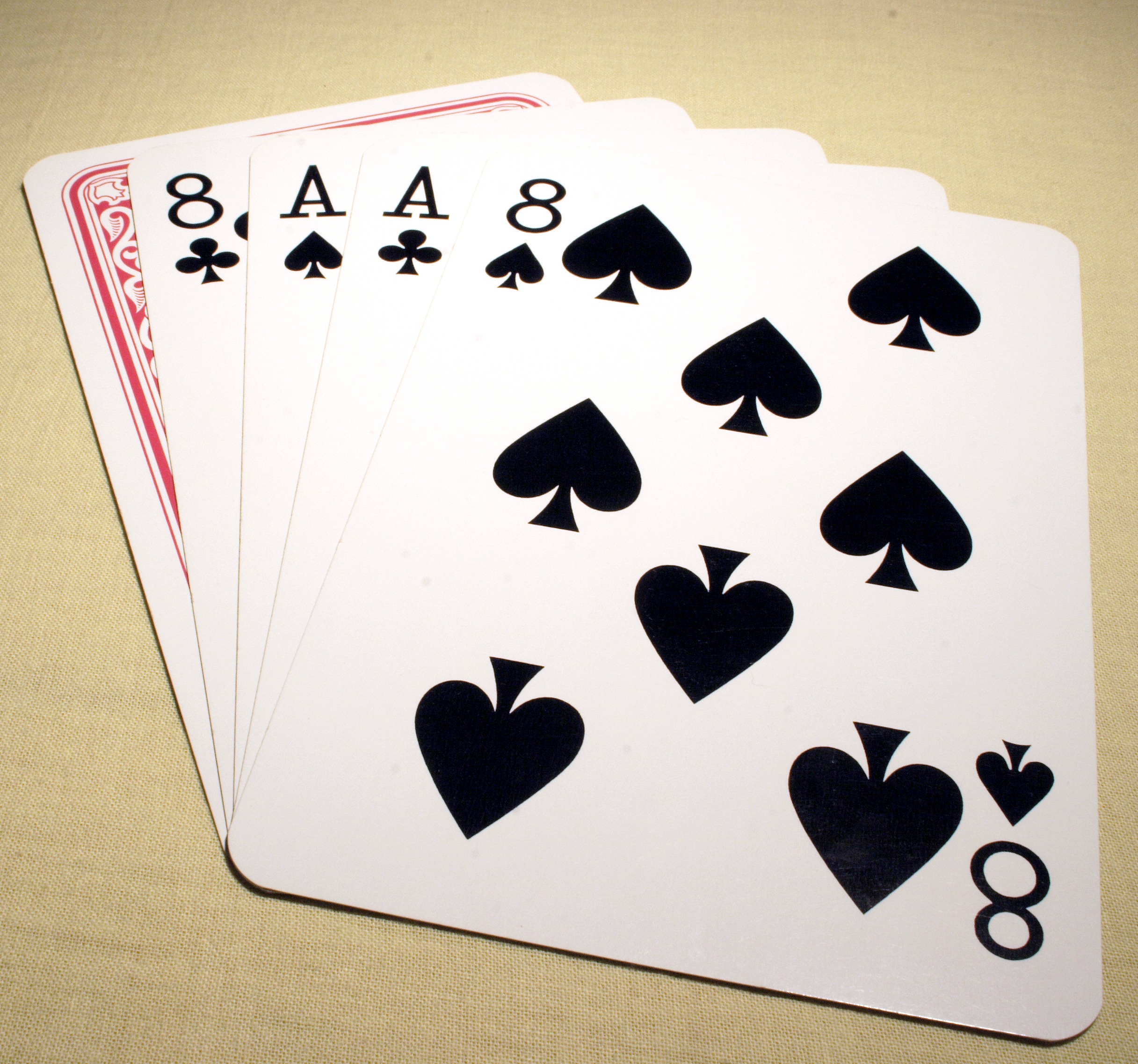
As noted above, for those who don’t know (or must be aware of), Aces & Eights has a hidden meaning for the title of their game. When Wild Bill Hickok was shot and killed in Deadwood, South Dakota in 1876, he was playing five-card draw poker. In his hand were the two black aces and the two black eights — forever known from that point on as a “Dead Man’s Hand.”

There are differing opinions on whether or not this is true, along with what the exact cards he had in his hand when he was shot and killed in Nuttal & Mann’s Saloon in Deadwood, South Dakota Territory, on August 2, 1876.

To close, Boot Hill is a fine game. The word I've used over the years is "skeletal" in terms of the rules being very bare bones.
 
What are your thoughts on the Boot Hill?