Search This Blog

Sunday, November 18, 2012

Boot Hill BH3 Bullets and Ballots – Classic TSR Old West Module

Is that Brian Blume and Gary Gygax on the cover?

The next Boot Hill  module up for review is BH3: Bullets and Ballots. This should come as no surprise if you've been reading the blog. And you have been reading, right?

Unlike the first two modules, BH3 is almost a mini-campaign in a single booklet, though nowhere near the scope of BH4- Burned Brush Wells or BH5: Range War! It takes the players on a very different ride than either of its predecessors and explores a subject that few RPG adventures have ever attempted. Rather than hunting for treasure or tracking down outlaws, the players become involved in a local election and can potentially influence its outcome. I'm hard pressed to think of another RPG module, especially one from the early 1980s, that centered on electoral politics.

Written by David James Ritchie, the module expands on material from the Boot Hill boxed set by returning to Promise City and greatly enlarging the map and descriptions of the town. The events take place shortly after those in Tombstone, Arizona, following the famous Battle of the OK Corral. At 32 pages, BH3 is a standard TSR module, yet it manages to pack in a surprising amount of material. With the expanded treatment of Promise City, the Game Master is given a well-developed home base should the players decide to settle there.

The Story

The premise is that Promise City is every bit as lawless as Cochise County, Arizona, during the height of the cattle wars. Familiar historical figures, including Johnny Behan, Billy Breakenridge, Ike Clanton, and "Buckskin" Frank Leslie, are mentioned throughout the setting. In total, the module details roughly 300 NPCs, giving Promise City one of the largest casts of characters found in any Boot Hill product.

The central conflict revolves around the struggle between the Law and Order faction, representing the town's respectable citizens, and the Cowboys, who have no intention of surrendering their influence. With elections approaching, both sides are determined to win by whatever means necessary. The offices up for grabs include mayor, city council, and town marshal, making the stakes considerably higher than a simple local dispute.

The campaign unfolds over a twelve-week period, providing the players with plenty to do. They can run for office themselves or throw their support behind one of the competing factions. Public opinion shifts from week to week based on campaign events, speeches, newspaper editorials, rumors, financial contributions, and, naturally, the occasional murder. After all, this is the Old West.

The mechanics supporting the election are surprisingly robust. Players can funnel money into campaigns, spread rumors, publish broadsheets, and deliver speeches in an effort to sway public sentiment. The Civic Association, representing the current administration, can also use its influence to hinder the Cowboys' efforts. Should the violence spiral out of control and too many candidates wind up dead, the Governor may eventually dispatch the Arizona Rangers or even call in the U.S. Army to restore order. It is a clever way of showing that there are consequences if the town descends into outright chaos.

When election day finally arrives, the outcome depends entirely on how events unfolded over the previous twelve weeks. There is no predetermined winner, and that is perhaps the module's greatest strength. Different groups can experience entirely different results each time they play.

Like the earlier Boot Hill modules, the final pages include several short scenarios that can either be inserted into the campaign or played independently. I particularly enjoyed the obvious nods to classic Western films with titles such as Hang 'em High and Once Upon a Time in the West.

BH3- Bullets and Ballots interior Art
That is certainly one way to win an election...

The Art

The artwork is something of a mixed bag. Some pieces are excellent, while others leave me scratching my head. More than the previous modules, BH3 indulges in TSR's habit of inserting inside jokes throughout the book. I enjoy a good bit of irreverent humor as much as anyone, but here it sometimes feels excessive.

One example is "Zebadiah Cook" on page 16. The illustration appears to be by Jim Holloway. Normally I enjoy Holloway's slightly exaggerated, humorous style, even in Dungeons & Dragons, but for whatever reason it does not quite fit the tone of this module.

The front cover continues the hand-tooled leather motif of the earlier Boot Hill adventures, but the characters themselves were apparently modeled after TSR staffers Jim Roslof, Jeff Easley, Jim Holloway, and Larry Elmore (they look like Brian Blume and Gary Gygax in the middle and left to me). I have no objection to inside jokes, yet this cover simply does not resonate with me. In fact, I like the module in spite of the cover rather than because of it. It is almost the opposite of N2: The Forest Oracle, where I love the cover but find the adventure itself rather disappointing (to say the very least). The back cover, featuring Mongo Bailey, likewise aims for humor but never quite lands for me.

Much like BH1 and BH2, BH3 demonstrates just how experimental the Boot Hill line really was. The more of these modules I read, the more convinced I become that the series lacked a consistent direction. Either there was no one steering the line with a long-term vision, or support arrived only sporadically as TSR found time and resources to devote to it. Given that the company's creative energy was increasingly focused on Dungeons & Dragons and Advanced Dungeons & Dragons, I suspect it was probably a combination of both.

Despite my criticisms, I genuinely like BH3. It does require a group willing to embrace politics, intrigue, and social maneuvering rather than constant gunfights, but that change of pace is part of its appeal. Not every Boot Hill adventure needs to end in a shootout at high noon, and Bullets and Ballots proves the game could successfully explore other aspects of life in the Old West.

Solid 3.5 out of 5 stars. 

Let me know your thoughts on this rather unusual module. 


Sunday, September 9, 2012

Let it Beagle Media Debut as an Indie RPG Publisher - Hurled into Eternity


Time for a micro blog update.

Since June I've been toiling away most nights in my man cave working on my first RPG. But, the story of the RPG in question: Hurled into Eternity goes farther back then June of 2012; in fact it goes back to 1995/96. Hurled into Eternity got its start as a traditional fantasy RPG back then. I wrote the game in an on and off again fashion for years, never quite finishing Quest (as the game is called).

This year my interest in westerns was reawakened and I started to write a Boot Hill module. It quickly became apparent there are far too many holes in the 1st and 2nd editions of Boot Hill, and 3rd is a different animal altogether. So in June I started to consider writing my own game. Looking about, the western genre isn't too crowded so I went for it. Fortunately for me however, I was able to reuse a ton from my unreleased game.

As of right now the game is available in its Alpha state
. The rules are there, a bit rough and not edited by my editor yet, but playable.

If you are interested let me know and I can direct you to the rules. Owing to its fantasy roots I might back-port the game to Quest. They certainly worked the other way around. So in a sense I've got a game that can go from ancient times to 1920s tech fairly easily.

I'd just like to be able to go back to my 1995 self and tell me that what I was working on would first be released as a western, I probably wouldn't have believed it.

Friday, September 7, 2012

Western City RPG – A Dusty Gem Worth Discovering

 Western City Card based Role Playing Game

Continuing my read-through of lesser-known Western RPGs and modules, today I’m taking a look at Western City, designed by Jörg Dunne and first published in Europe back in 2006.


Before we get into it: this is an overview, not a rules deep dive.


might be a rules-light system on the surface, but it’s got enough nuance that a full breakdown would go well beyond a standard review. Just know: it’s lean, but not shallow.

How I Got It

I came into possession of Western City thanks to a good friend who scored a lot of games off eBay. He handed it to me with a shrug and said, “I’m probably never going to read this.” Challenge accepted.

It sat on my desk for a few days until I cracked it open — and then finished it in one go. That’s not too hard, since it clocks in at a digest-sized 92 pages with a clean layout and a manageable word count per page.

Presentation & Style

Let’s start with the aesthetics. Western City immediately gets a nod for its sharp cover design and internal art by Kathy Schad, which has a distinctive and appealing style — somewhat reminiscent of early Elmore, which is a plus in my book (despite what the grognards say).

The period photos, bullet-hole textures, and playing card visuals throughout reinforce the Western tone well. This isn’t the dry grit of Boot Hill — this feels more stylized, more cinematic.

Unfortunately, the translation (in my January 2008 first printing) leaves a lot to be desired. There are numerous awkward phrases and reversed quotation marks. It’s readable, but janky — a shame, because the presentation otherwise really works.

The Game Itself

Let’s clear one thing up: Western City isn’t a Western RPG in the vein of Boot Hill, Deadlands, or even Sidewinder. Instead, it’s designed for collaborative storytelling, player-driven scenes, and a gamemasterless structure. It leans more “story game” than “simulation.” Think improv theater with poker chips.

Here’s all you need to play:

  • One d8
  • A deck of playing cards
  • Poker chips
  • A dollar bill (!)

That’s it. And just to make it more impressive: it was written in 72 hours for a game design contest. If that’s true? Hats off.

Character Creation

Characters are built around three core stats:

  • Body (Clubs)
  • Mind (Diamonds)
  • Charisma (Spades)

Players distribute points between 1–5 across these. Everyone gets 8 “Hearts”, which serve as your hit points (shades of Legend of Zelda, maybe?). No rolling — just assign points and move on.

Skills range 1–5 and are resolved with a d6. You get a pool of points to spread as you like, with difficulty based on what you’re trying to do.

From there, you assign background details, Hubris (a character flaw), and — most importantly — you create an Extra and a Foe. These characters serve as part of the supporting cast for other players’ stories. Once all players have built theirs, you use poker chips to bid and assign Extras and Foes. It’s a brilliant mechanic — ensuring everyone’s story is already entangled with everyone else’s. You’re building a shared narrative web from the jump.

Later in play, you can also introduce spontaneous Extras as needed, which keeps the story flexible and reactive.

How the Game Flows

Time is divided into three parts per day:

  • Dawn
  • Noon
  • Dusk

Events or “Scenes” happen during those time blocks. Each player proposes a scene where their character is the star. Other players take the roles of Extras or Foes — so no one is ever just watching. Even if your character’s not in the spotlight, you’re still part of the action.

Scenes are bid on and ordered collaboratively, though if there’s strong disagreement, there’s a rule called “Not In My Town” that lets a player force a scene through. It’s all very improv-heavy — and cleverly set up to prevent players from just sitting on the sidelines.

High Noon, naturally, is where the big confrontation is most likely to take place — though it’s not locked in.

Mechanics & Design Choices

Combat, wounds, resolution — all are simple and snappy. The suits from the playing cards play a subtle mechanical role in tests and effects. It’s clever without being clunky.

One downside? Characters can’t die unless the player wants them to. For me, that’s a head-scratcher. I’m not saying every RPG has to be meat-grinder mode, but the lack of stakes takes the wind out of high tension moments. Then again, this is designed for narrative control, not tactical risk.

Optional Magic

There is an optional magic system, and it follows the same rules-light approach as the rest of the book. Personally, I’m a fan of gritty realism in Westerns, so I’d likely skip it — but if you want to inject a bit of Weird West flavor, it’s there.

Equipment? Monsters? Nope.

There are no gear lists or bestiaries. The assumption is: if it exists in a Western, it exists here. That’s either liberating or annoying depending on your comfort level with improv.

Leveling Up

No XP tables here. Players vote on experience awards based on scenes and performance — another narrative-heavy design choice that fits the game’s structure, even if it leans more “actor” than “gamer.”

Final Thoughts

Rating: 3.5 out of 5 stars

There’s a lot to admire in Western City. The system is elegant, unique, and impressively efficient. It leans hard into collaborative, character-driven roleplay — and if you’re the type who loves improv, narrative arcs, and shared storytelling, it’s probably a 4-star (or higher) game.

But for me? I’m a role-player, not an actor. I like some structure. I like GMs. I like death being on the table. Western City is a beautifully crafted storytelling machine — but it’s not what I reach for on game night.

Still, it’s inventive, inspiring, and absolutely worth a read — especially if you’re looking to stretch beyond traditional RPG formats.

Friday, August 24, 2012

Boot Hill BH2 Lost Conquistador Mine – Classic TSR Old West Module


BH2: Lost Conquistador Mine, as the title suggests, is the second Boot Hill module in TSR's line for its miniatures and role-playing Western game. It was written by David Cook and Tom Moldvay, which is pretty impressive when you stop and think about it. Here you have the future principal designer of Advanced Dungeons & Dragons 2nd Edition working alongside the editor of the Moldvay Basic Dungeons & Dragons set on the same adventure.

As noted on the frontispiece, the adventure was originally written as a tournament module for GenCon XIII in 1980. Two years later it was revised and published for general release. That is not necessarily a bad thing, but like its Dungeons & Dragons cousins, the A1-A4 tournament series, it still shows signs of its origins. I've discussed this both here and elsewhere on the web. Tournament adventures are not inherently flawed, but they often reveal the constraints of what they were originally designed to accomplish. I could be off base in this case, however, as BH2 lacks the scoring system found in the A-series modules.

Right from the cover, I love the graphic design. Like BH1, Lost Conquistador Mine perfectly captures the feel of an Old West RPG. The hand-tooled leather motif evokes saddles, holsters, and cowboy boots, immediately putting the reader in the right frame of mind. The module follows TSR's standard 32-page format, and the interior artwork is equally strong. Jeff Easley, Jim Holloway, and Bill Willingham provide most of the illustrations, and the quality shows.

The introduction is fairly lengthy and assumes the referee is new to the game, which is not a bad approach. It also establishes the adventure's timeframe as 1868, meaning not every iconic firearm of the Old West is available. I actually like this restriction because it helps reinforce the historical setting.

Before the adventure even begins, however, the referee is presented with another batch of rules additions. Like BH1, there are noticeable gaps in the core Boot Hill rules that the module attempts to fill. This time we get rules covering vigilantes, NPC reactions, crime and punishment, overland travel, dangerous animals, night fighting, telescopic sights, and bronc busting. That is quite a list. As I mentioned in my review of BH1, if someone collected all of the supplemental rules from the first three Boot Hill modules into a single document, it would go a long way toward completing the game. I know I sound like a broken record, but while I think 1st and 2nd Edition Boot Hill have an excellent foundation, they clearly needed more development as role-playing games.

The next section introduces the town of Dead Mule, detailing its buildings and inhabitants. Like BH1, a number of smaller encounters can occur before the players ever reach the main objective, the Lost Conquistador Mine. The buildings themselves receive their own keyed descriptions, making the town feel reasonably complete.

The adventure hook is a variation on the classic "a man walks into a bar with a job." In this case, the man is an aging prospector named Dutch Jack, who dies after leaving his possessions, including a map to the Lost Conquistador Mine, to the player characters. In some ways it reminds me of "The Good, the Bad and the Ugly" where the dying Confederate soldier sets Blondie and Tuco on the trail of the buried Confederate gold. From there, the adventure shifts into overland travel, with the partially decipherable map serving as both a navigation challenge and a way to expand the adventure.

My biggest reservation involves the wilderness portion of the module. The keyed encounters often feel disconnected from one another once the players leave town. I am not entirely sure whether this is a weakness of the adventure or simply a challenge inherent to the Western genre. In BH2, many of the encounters feel isolated rather than contributing to a larger narrative.

If you are trying to emulate a classic Western, the various scenes should generally reinforce one another. A good example from another TSR game is O2- Blade of Vengeance for Basic D&D. That module succeeds because each encounter builds toward the climax. I sometimes wonder whether a Boot Hill adventure structured in a similar fashion would have been stronger. Here, we have a mixture of fixed wilderness encounters and broader wilderness scenarios that function much like the town encounters. Part of me likes the flexibility, while another part thinks it creates unnecessary confusion. Even after rereading the module, I am still undecided.

Interior Art for BH 2 Lost Conquistador Mine
The Crazed Prospector attacks!

Eventually, the players reach the eponymous Lost Conquistador Mine, where they explore a series of relatively small caves rather than a sprawling mining complex. I will not spoil the surprises for anyone who has not read the adventure, but this section occupies only a small portion of the module. And yes, just as you would expect, there is gold waiting at the end.

Of special note is the hedging on the supernatural by the authors. I don't fault them for a real-world explanation for the ghost of the conquistador. At the time there was some that did not like their RPG genres mixed together and over two decades before Deadlands came out. 

Overall, I like BH2, but I cannot quite give it more than 3.5 out of 5 stars. There is nothing fundamentally wrong with the adventure, but the Lost Conquistador Mine itself turns out to be a surprisingly small part of the overall module. In reality, it is more a collection of caves than an actual mine. BH2 illustrates a criticism I have heard for years. The designers often seemed uncertain how to structure Western adventures when they could not simply send the players into the local "monster hotel." It also demonstrates how difficult it is to make a cave-based finale compelling in a Western setting. You can only rely on mountain lions and bears so many times, and BH2 uses both.

Ironically, this is about as close as the TSR Boot Hill line comes to a traditional dungeon crawl, at least until BH5: Range War!, which I have yet to track down. Like BH1, it serves as an excellent introductory adventure for both new referees and new players.

In the end, I do recommend BH2, particularly if you are running the Promise City campaign, as Dead Mule fits nicely into that setting. Like a real gold mine, the adventure contains worthwhile nuggets, but you have to put in a little work to uncover them.

As an aside, I have been remarkably fortunate picking up these modules on eBay. Most have cost me between $5 and $10, and nearly all have been in excellent condition, with very little staple rust and few, if any, blemishes.

What are your thoughts on Boot Hill BH2 Lost Conquistador Mine?

Click here for my next Boot Hill review: BH3- Bullets and Ballots.

Thursday, August 23, 2012

Boot Hill BH1 Mad Mesa Review – Classic TSR Old West Module


Cover art by Bill Willingham

Boot Hill modules were something of a mixed bag. This is especially true when you consider that BH1 through BH5 spanned two different editions between 1981 and 1984. Granted, the structural differences between 1st and 2nd Edition are minor, but it’s still worth noting. Five modules in three years, with one being a Gen Con tournament module (BH2), is not a stellar track record. Of course, D&D was exploding for TSR at the time, so they rightly focused on their biggest seller. Can’t fault them for that.

As I’ve covered before, Boot Hill is one hell of a game. It was one of the very first RPGs ever written and was designed by Brian Blume and Gary Gygax.

Back to the modules: I’ll be reviewing all five:

Right now I have the first three and just finished reading through BH3.

First off, I’m a big fan of the graphical presentation of the first three modules. They have that tooled-leather look, and my favorite old-school TSR artist, Bill Willingham, did the cover. Anytime you get Willingham and two-gun action, it’s going to be good. There are also several of his interior pieces, which is even better. Everything about the look screams Old West, mission accomplished. The early covers also remind me strongly of the excellent Time-Life Series "The Old West series (which I finally completed!).

I even like some of the Jeff Dee and Erol Otus pieces here. Dee’s sense of motion is excellent. The inside cover has a map of the town of Mad Mesa, and the back cover features the Mesa Gazette. In general, there is a lot of art inside the module, especially for an early RPG product. Contrast this with A2- Secret of the Slavers Stockade which sparse in comparison but is around the same length.

BH1 Mad Mesa - interior art by Bill Willingham
Interior art by Bill Willingham

BH1: Mad Mesa

BH1 is a collaboration between Jerry Epperson and Tom Moldvay (of Basic Set fame). At 32 pages it’s a standard-length module for the era. Like many TSR products of the time, it includes a large solo-play section using “choose your own adventure” style rules. Before that, it adds new rules, something all Boot Hill products do. This can’t be overstated: the core 1st and 2nd Edition Boot Hill rules are incredibly sparse, skeletal is how I often describe it. Mad Mesa nicely fleshes out law & order and NPC reactions.

The solo-play premise is straightforward: Your character is riding at dusk looking for a place to spend the night when shots ring out. From there you follow numbered entries until the tale ends. It’s a quick way to learn the system and gives the referee (they weren’t called GMs yet) a chance to practice without players.

The multi-player section builds on the solo material and uses the central NPC “Uncle Zeke” (related to one of the PCs) to kick things off. This works well because in Western RPGs, NPC interactions matter far more than in fantasy games. Western adventures are driven more by character drama than by monsters in funny suits. BH1 gives the referee a bare-bones plot and plenty of encounters to expand upon.

The Kane-Russell Cattle War could easily stretch for months or years of game time. Many of the hooks can lead to glorious gunfights and TNT-flinging, and there’s nothing wrong with that.

I’ve only recently gotten deeper into Western RPGs, but Mad Mesa would work great as a Village of Hommlet or Keep on the Borderlands -style introductory module. The town setting keeps the scope manageable even with a large cast of NPCs. From there the referee can expand outward as the players get comfortable.

If I ran it, I’d set it in a slightly “mythical” Old West rather than strictly historical. I’m not talking full Weird West, but modern Western RPGs often lean too hard on “six-guns and sorcery” because pure roleplay-driven adventures are harder to structure than dungeon crawls.

BH1 Mad Mesa - interior gunfighters art by Bill Willingham
Even more Bill Willingham art!

Final Verdict: Out of 5 stars I give BH1: Mad Mesa a 3.5. There are no real flaws, but it also lacks deep, standout hooks. Like the core Boot Hill rules, it relies heavily on the referee’s skill to bring it to life. At its heart, Boot Hill feels closer to Chainmail than to D&D. In summary: I like it, it looks great, and it’s a useful module, just not a barn burner.

I should add that my next review might be Western City RPG before I tackle BH2, as I’ve also been reading through the Mongoose/Redbrick Western RPG I received as a gift. It’s a neat system, but I’m not sure I’d run it. More on that later.

What are your thoughts on BH1- Mad Mesa? 

Sunday, August 12, 2012

My Top 10 Favorite Westerns of All Time


NOTE: because of a tie at #1 there is no number #2 movie on the list.

Fueled by my growing re interest in the Old West in general, I have been either watching for the first time or re-watching many Westerns. My dad is a big fan of them and I watched quite a few in my youth and teens with him before I drifted away to other pursuits. As I noted in my post about Boot Hill, I never played it since we were so focused on AD&D. With my reawakening to Westerns, my thoughts have turned to western themed RPGs and my favorite westerns of all time.

My list is not going to be to everyone’s taste. Since I was born in a decade where Westerns were decidedly on the decline (the 70s), my list will reflect my age. If I were to ask my dad I am sure his would be different, with some overlap. Some films are timeless. So without further delay, here is my top 10 favorite Westerns of all time.

#1A Unforgiven (1992) Of all of Clint Eastwood’s westerns, which are considerable, this one stands head and shoulders above the rest. Forget for a moment that it won Academy Awards (earning Eastwood Best Director). Think of the script itself. Eastwood sat on it for 25 years so he would be just the right age to play William Munny. Normally I do not like anti heroes who are anti heroes for the sake of it, but Munny is cut from a different cloth: a man who was a drunken, stone cold killer whose acts include dynamiting the Rock and Island in '69, killing women and children. Let that sink in for a minute. So when he comes out of retirement for one more job, he is doing it for the sake of his kids. Of course he's really is coming out of retirement to kill two men who cut up a prostitute.

The cast is epic: Eastwood, Gene Hackman, and Morgan Freeman. Those three alone make it great. The interplay between William (Eastwood) and Ned (Freeman) carries the movie, then it shifts for the final scene where Munny takes it to Little Bill.

From the story side the best part is that the main characters are contrasted by W.W. Beauchamp’s writings throughout the movie with the mythological West and its events. In other words the hows and whats of what really happened versus how they were reported or perceived. Hackman’s Little Bill is menacing without being over the top, a hard man who utterly ruthless when need be.

The final scene is perhaps the finest scene of cinema related to a Western. They do not get better than the shootout, if one could call it that.

Best lines in Unforgiven:

  • “Hell, I even thought I was dead, turned out I was just in Nebraska.” - Little Bill
  • "That's right I've killed women and children. Killed just about everything that's walked or crawled at one time or another, and I'm here to kill you Little Bill. For what you did to Ned." - William Munny
  • "It’s a hell of a thing, killing a man. You take away all he’s got and all he’s ever gonna have." - William Munny
  • "You better bury Ned right...or I'll come back here and kill every single one of you sons of bitches." - William Munny

#1B Tombstone (1993) It is very tough not to list this movie as number 1, so1B it is. This movie is perhaps the finest retelling of the legendary gunfight at the OK Corral in Tombstone, Arizona, on October 26th, 1881. The previous standard was Gunfight at the O.K. Corral in the 1950s that left a lot to be desired.

The gunfight and the Earp Vendetta ride was THE event of the West, even with the myth that surrounds it, so it is fitting that this movie is at the top of the heap. Tombstone features an ensemble cast including Kurt Russell, Powers Boothe, Val Kilmer, Michael Biehn, Sam Elliott, Bill Paxton, Billy Bob Thornton, Stephen Lang, Jason Priestley, and Charlton Heston amongst others. But it is the acting of Kilmer as Doc Holliday that steals the show. Doc, as Wyatt would later recollect, “was the deadliest, fastest, nerviest man I ever saw.” The whole movie touches on almost every part of the Earp/Cowboy war and where it takes liberties it does a good job making them plausible and seamless.

The telling also does well in presenting a fairly balanced view of the Earps. The Earps were canonically the “good guys” but their dealings in town say otherwise. The Earps were not necessarily the good guys and the Cowboys were not necessarily the bad guys. The fact is that in the events of 1881 people on both sides were split in their loyalties.

The actors, particularly Russell, do a great job with the dialogue, making it seem that you are actually in 1881. With all this in mind Kilmer as a menacing, Latin quoting, stone cold killer with a southern drawl did the best acting as Doc Holliday. Closely behind him is Biehn’s portrayal of Johnny Ringo. Going hand in hand with this is the cinematography since it was actually shot in Arizona.

Best lines in Tombstone:

  •  "I'm your huckleberry." - Doc Holliday
  • “You tell um' I'm coming for um' And Hell's coming with me. You hear? HELL'S COMIN' WITH ME!" - Wyatt Earp."
  • "No me, I'm in my prime." - Doc Holliday 

#3 The Good,The Bad, The Ugly (1966) Out of the three in the Dollars Trilogy, The Good, The Bad, and The Ugly is by far the best. That is not to say that the others (A Fistful of Dollars and For a Few Dollars More) are bad. It is that The Good, The Bad, and The Ugly is that good.

The twists and turns of the movie leave you at the edge of your seat as the movie traces Tuco (the Ugly) and Angel Eyes (the Bad) pursuit of $200,000 dollars in Confederate gold. The Mexican standoff at the end with the soaring score is likewise impressive as is the ending.

Best lines in The Good, The Bad, The Ugly:

  •  "When you have to shoot, shoot. Don’t talk." - Tuco
  • “You see, in this world there’s two kinds of people, my friend. Those with loaded guns… and those who dig." - Blondie
  • "Two hundred thousand dollars is a lot of money. We're gonna have to earn it." - Blondie  

#4 The Searchers (1956) This is widely regarded as the greatest western of all time and was registered as culturally significant by the Library of Congress in 1989. That alone says something. Additionally the American Film Institute named it the greatest Western of all time in 2008. Directed by John Ford and starring John Wayne and Natalie Wood, The Searchers is THE Western for the older demographic. My own memories of it are hazy as I think I may have watched it one time only. It is already at the top of my list to rewatch. Because my recollections are dim I am looking forward to this one, as it will be like watching it for the first time.

Best lines in The Searchers:

  •  "That’ll be the day." - Ethan
  • I don't stand talkin' in the wind." - Ethan

#5 High Plains Drifter (1973) A Clint Eastwood western with a touch of the supernatural? Yes please. High Plains Drifter is a great story because the real villains in the movie are the townspeople themselves that the Drifter is there to defend. They are villains because the townsfolk murdered the sheriff. Time goes by and the mysterious Drifter appears in town. It is alluded to (but never said definitively) that the mysterious Drifter is the sheriff having returned from the grave. Drifter is one of those movies that makes you think, especially at the very end when the Drifter rides away from Lago and the midget is working on a tombstone that you cannot see what is inscribed on it. The midget says he does not know the Stranger, to which the Stranger replies, and as he rides away it shows the tombstone of Joe Morgan, the murdered sheriff.

Best lines in High Plains Drifter:

  • The only problem you've got Sheriff is a short supply of guts." - The Stranger
  • "Yes, you do." - The Stranger 

#6 Dances with Wolves (1990) Costner makes the list again, but this movie is impossible to ignore in the Western genre. It is telling that it is a great story that has nothing really in common with other westerns, mainly focusing on Indians and Lt. John Dunbar’s interactions with them. In other words it is a story that happens to take place in the west.

Dances with Wolves is a visual and auditory masterpiece with sweeping vistas and scenery and a magnificent soundtrack to accompany it. The majesty of Dunbar’s first ride through the plains cinematic gold with the swell of Journey to Fort Sedgewick/Shooting Star from the soundtrack swelling.

The movie and its characters span the range of human emotion: despair, loneliness, hope, friendship, love, hate, madness, pragmatism, and laughter.

Perhaps my favorite scene of the movie is the one where the old Indian chief pulls forth a Spanish conquistador helmet when he and Dunbar are talking about the coming of the white man. The chief says this was from the time of his grandfather’s grandfather, implying that the Indians would survive this too. The viewer gets a great sense of sadness knowing that the Chief does not know the tidal wave of settlers that is coming. Costner (the director too) side steps this by having the Indians leave their winter camp before the Army arrives. He then wisely ends the movie then and there, but sadly tells the story of the end of the Indian way of life as the end credits roll.

In short Dances with Wolves is nothing short of breathtaking.

Best lines in Dances With Wolves:

  • Somebody back east is sayin' "Why don't he write?" - Timmons
  •  "The strangeness of this life cannot be measured: in trying to produce my own death, I was elevated to the status of a living hero." -John Dunbar

#7 True Grit (1969) If I had to pick just one John Wayne film it would be this one. His portrayal of Rooster is great! Some might not like it because it is John Wayne playing John Wayne, but I liked it well enough.

Best lines in True Grit:

  • “Fill your hands you son of a bitch!" - Rooster Cogburn
  •  "I call that bold talk for a one-eyed fat man." - Ned Pepper

#8 A Fist Full of Dollars (1964) Ride into town on a donkey, tell the undertaker you need three coffins momentarily and then shoot the hell out of some desperadoes? Oh Hell yeah.

Best lines in A Fist Full of Dollars:

  • “My mule don’t like people laughing at him, gets the funny feeling they are laughing at him. ” - The Man with No Name
  • “My mistake…. four coffins.”  - The Man with No Name

#9 Silverado (1985) This is my guilty pleasure movie as far as Westerns, but you cannot go wrong with the cast. It is damn impressive: Kevin Kline, Brian Dennehy, Jeff Goldblum, Scott Glenn, Kevin Costner, Danny Glover, Rosanna Arquette, John Cleese and many more. It seems that ensemble casts work well in westerns and Silverado certainly has the right actors.

Silverado is a throwback to the traditional western tales after the revisionist westerns of the late 60s and 70s. The tale is fun. You care about the good guys and actually want them to win. The fact that the movie is well shot, directed, and done well in terms of cinematography just adds to it. The final gun battle at the end has so many great scenes it is hard not to like this movie.

Best lines in Silverado (so many its hard to choose!):

  • “I don't want to kill you and you don't want to be dead." - Mal
  • "Now we're going to give you a fair trial, followed by a first-class hangin'" - Cobb
  • "Where's the dog" (running gag) 

#10 Open Range (2003) This will surprise many people I think, but it is actually quite a good movie. Kevin Costner and Robert Duvall are great in this movie as is Annette Benning. In a few places the movie wanders off script in terms of logic and consistency, but for the most part it tells a very good story of the end of the open range and the rise of the cattle barons. In fact the end of the open range was one of the defining moments of the Old West.

Costner’s character Charlie is not an anti hero per se, but a man troubled by his past. When it comes to gun fighting however Charlie is more akin to an Old West version of Liam Neeson’s character in Taken. He just goes to town and obliterates everything in sight.

While some might see it as contrived the budding romance between Costner and Bening’s characters is a good representation of how people approached courtship in the 1800s: stilted, awkward but well meaning.

Best lines in Open Range:

  • “I ain't got no problem with Killin' Boss, never have." - Charlie
  • "Now he asked you twice, ain't gonna ask you again." - Charlie
  • "You won't find it so funny when you're shot to hell and dying." - Baxter 

Honorable Mentions Pale Rider, Hang em High, Little Big Man, Outlaw Josey Wales, Once Upon a time in the West, and Two Mules for Sister Sarah. There are plenty of great westerns and it is a shame that the current regimes in Hollywood have rendered them as “already been done”. The remake of True Grit and the movie Appaloosa are worthy westerns as well.

How about your Top 10? There are so many to choose from its near impossible!

Monday, July 2, 2012

Twilight: 2000 – A Look Back at GDW’s Gritty Post-Apocalyptic Masterpiece


Twilight 2000 1st Edition Box art
Time to print a lot of character sheets...You'll need them
 
Time to review and reflect on another of the games that I played as a teenager, but this time, sadly, no longer have the books for:

This offering by Games Designer Workshop is a great, great game with a gritty realism. For some reason, out of all the games I had back in the day, I sold these… and I can’t really remember why I did, either… ahhh, foolish youth.

For those not in the know, the game covers the events of World War III, starting with the (then) current timeline of the late 80s and the Cold War. From there it branches off to the start of a Sino-Soviet war and then a war breaking out in Europe between the Warsaw Pact forces and NATO. “Limited” nuclear exchanges happen and the war spreads to form a truly world war as industrial capacity breaks down, food becomes scarce, and command and control of the various armies disintegrates. The conflict grows and eventually engulfs most of North America from invasion from the south. In short, the shit hits the fan everywhere.

The players are cast in the roles (most often) of US Army soldiers trying to survive the falling apart of their unit/division as they are left to fend for themselves. In most cases the main overall theme is to try and make it back to Western Europe and get a transport back to the US.

Two main points stick out in my mind from my time playing Twilight: 2000

One, combat is downright deadly as would be imagined. Body armor helps, but not enough if the hit happens in the right location. Because of this, we were never that attached to our characters, because death was too common of an occurrence. This is the biggest departure I think that players of Fantasy RPGs struggled with. Armor is there but doesn’t save you like in D&D. Plus there aren’t any clerics to reattach your severed arm…

Two, we quickly learned the value of two weapons that still stand out in my mind nearly 20 years later. For close-in combat, nothing beat the H&K CAW (Combat Assault Weapon), an automatic shotgun. We learned through a few characters to sling the

Speaking of which, we learned that an even better tactic than using a CAW at close range was using an M-19 grenade launcher from a distance. We would stand back and fire from our vehicles at a target, only venturing in after the smoke had cleared.Small Arms Guide for 1st Edition Twilight 2000

Another interesting point is the scarcity of gas and diesel. Stills helped offset this (ours seemed to get shot up regularly), and we learned to leave them camouflaged and go back to them after the firefight. We had a couple of HMMWVs and once had an LAV-25.

The problem was the LAV became a burden, as it required so much fuel. Better yet was when we got FAVs (with M-19 grenade launchers, ‘natch). It was much more fun, as speed was a huge advantage compared to the larger vehicles. This represented the setting well — only large installations with solid logistical support could field tanks. Even with a few TOWs or other rocket systems, we avoided fighting them whenever possible.

Another interesting point is the scarcity of gas/diesel. Stills offset this (ours seemed to get shot up regularly...as in EVERY session) and we learned to leave it camouflaged and go back to it after the firefight.  We have a couple of HMMVs and once had a LAV-25. Problem was the LAV became a burden, as it required so much fuel. Better yet was when we got FAVs (with M-19 grenade launchers ‘natch). It was much fun as it would have been for the larger vehicles, speed was much better. This represented the setting well as only large installations with a logistical support could field tanks. Which even with a few TOWs or other rocket systems we avoided fighting.

Equipment lists and weaponry were up-to-date as of the early 90s and would need some updates if you played the 1st Edition rules. The supplements to the game, like the

Which brings up a related point: trying to figure out vehicle combat was overly complex and frustrating as all hell.

US Army Guide for 1st Edition Twilight 2000In terms of characters, none were particularly memorable except one that I played in a tournament. The GM ruled that a flash-bang grenade had blown off my Welsh gunner’s leg… mind you, I was on the outer edge of the effect radius. Basically he didn’t understand the rules or what that type of grenade actually did. That incident, along with some neckbeard historical gamers at the same con, turned me off to open gaming for a long time.

The character creation process was good and flowed well, allowing for various nationalities, genders, and areas of responsibility across the service branches. Rank is hardly an issue — outside of your own squad, NCOs and officers can’t just boss you around. The army is falling to pieces and command and control is non-existent.

I only had minimal experience with the 2nd Edition rules. We took our characters from 1st Edition and tried them out. Later on we used the 2nd Edition rules in a modern-day “brush fire wars” type rather than the World War III angle (before GDW did it). We jet-setted around in our Learjet for the highest bidder. Not much came of that, and college beckoned for all of us shortly thereafter, and not long after college, GDW folded in 1996.2nd Edition Twlight 2000 Rules

The only other thing that I think did not work well in the game system are the hesitation rules. Basically everyone had a factor that governed (more or less) your actions in a firefight, and hesitations required pauses reflecting the PC’s ability to keep it together under fire. While realistic, it was also a drag on the game — you had to wait while everyone else was doing something. One lucky roll during character creation and you were infinitely better in combat than your foes or teammates. If you are like me and roll crappy for your PCs (that’s any system), then this was a source of frustration as well.

Summation: The entire line was well done with very good artwork and an abundance of supplements. We never used the modules all that much, but there certainly was a wide range of them.

In short, a great game — lots of fun. Just don’t play it if you can’t handle the concept of your character dying, because the likelihood of it if you go into every combat like it’s D&D is very high.


Sunday, July 1, 2012

Warhammer Siege: The Most Promising Supplement That Was Utterly Unplayable


Warhammer 3rd Edition Siege Cover rulebook
"Such a cool cover for such a flawed book."

Ahh, the good old Warhammer Siege supplement for 3rd Edition Warhammer Fantasy Battle. Was there ever something so promising, but ultimately unplayable?

When I was in high school I can’t begin to tell you how much we looked forward to playing this, how much effort we put into creating scale model stone throwers, siege towers, drills, sheds, catapults, and other siege equipment, to say nothing of the scratch-built castle I made that was huge. I don’t think there has ever been a bigger letdown in the history of man…ever. I don’t say this lightly either. Read on to find out why.

My friends and I (Dave and Jeff) spent a great deal of time playing Warhammer 3rd Edition in 1989–92ish, with a fair amount of Warhammer before college beckoned in the Fall of 1991. We were all pretty well versed in the rules and how it played by then and were looking forward to the new challenges that Siege offered. We had progressed rapidly from Warhammer Fantasy Roleplay to Fantasy Battles to Siege. Each of us had large armies and were some of GW’s biggest fans this side of the pond.

An assault underway on the Might Fortress

As mentioned above, we got our supplies, armies, and terrain together and gathered in the basement of Dave’s house. I think we prepped for several days before the game actually began (incidentally, Dave’s ping pong table was perfect for a Warhammer table). We pointed out our respective armies: Jeff playing his Orcs and Goblins were the defenders of the castle, and I was playing my Empire army as the attackers. (I recall we rolled randomly to see who attacked and who defended.)

After noticing some interesting loopholes (I had units of Landstrum (levies) that I never intended to bring onto the main board, continuously in the remote zones scavenging for supplies to reduce my point costs) is one that came to mind. Mind you, I didn’t actually have the models either, but they were never coming on the board. We finally got the main game rolling.

I’m not going to bore you with half-recollections, but skip to the meat of this post.

As mentioned above, we got our supplies, armies, and terrain together and gathered in the basement of Dave’s house. I think we prepped for several days before the game actually began (incidentally, Dave’s ping pong table was perfect for a Warhammer table). We pointed out our respective armies: Jeff playing his Orcs and Goblins were the defenders of the castle, and I was playing my Empire army as the attackers. (I recall we rolled randomly to see who attacked and who defended.)

After noticing some interesting loopholes (I had units of Landstrum (levies) that I never intended to bring onto the main board, continuously in the remote zones scavenging for supplies to reduce my point costs) is one that came to mind. Mind you, I didn’t actually have the models either, but they were never coming on the board. We finally got the main game rolling.

I’m not going to bore you with half-recollections, but skip to the meat of this post.

Finally, the strategic phase, foraging, strategic time, etc., was over and we got to firing. Now, in order to save points I had skimped on ammo for the siege weapons, figuring I could scavenge for them. We looked through the rules and… nope, no go. I was horrified: I had made such a huge blunder. You can forage for supplies but not ammo. Immediately, one thought: do I have enough ammo? As it turned out I had plenty. (Makes no sense for stone throwers, but I digress.) I tried to hide it and grabbed for my dice.

Reluctantly, I have my catapult fire: it launches and it does middling damage to the wall it’s facing. Next up, the 10-man cannon with barely any ammo. I figure that I’m not going to have enough ammo to do anything to the castle and will have to fall back on a futile ladder and ropes assault. The dice roll a pretty good result, we then flip to the section with wall damage and look on in horror as one shot blows away the section of wall it’s firing at and does so much damage that the secondary collapse blows up the entire facing, to say nothing of the Orcs that it vaporizes in the resulting collapses.

We then stare at each other dumbfounded. Did that really just happen? Did we miss something in the rules?

I can’t stress this enough: the three of us literally stopped the game, looked at each other, then we huddled around the rule book, looking at the relevant rule sections. Now the three of us had each taken turns reading it and it’s still “What the Hell?” We also figured we had the rules down pat, but nope.

We had read the rules right and the castle wall was history from one shot. A nanosecond later we all come to the same conclusion. Did they play-test this at all? And that pretty much ended that game right there. We tried a couple more scenarios and the results were pretty much the same.

What a disappointment, one of the greatest of my thirty years of gaming. 

Now sure, the rules have some notes about how the GM can increase the walls statistics but the wasn't the point. As written they were pretty wobbly. Perhaps the envisioned that people would take the top end artillery? 

Siege rules were written with the models ACTUAL foam walls in mind?
 

The back portion of the book had rules for 40K, but we weren’t into 40K, so we never tried the 40K rules for it. One would imagine that if gunpowder weapons could blow up a fortification with one shot, then what lasers, bombs, siege dreadnoughts, etc. would do to it? Sure, the energy fields might have made them last a tad bit longer, but ugh, who wants to game that out?

So that was my first (and pretty much only) brush with Warhammer Siege, and it sticks out in my mind like a sore thumb. The rules could not have been conceivably tested in any way, shape, or form. It’s probably fitting that the large (as in 3-foot castle), counters, siege engines, and the like are mostly long gone now. It would be too painful to look at the time and effort put in for such an enormous letdown. Certainly a low point for me in terms of gaming.

As a quick aside, I always wanted to create 10-man cannon and crew. Maybe I will as homage reminder of the game. 

There you have it. What were your experiences with Warhammer Siege?

Tuesday, June 26, 2012

Boot Hill RPG – Fast, Deadly, and Perfect for Old West Campaigns

1st Edition Boot Hill box cover art 
 
There are some great role-playing games out there that I’ve known about for years but never played, and this is about one of them. Boot Hill written by Gary Gygax and Brian Blume was one of TSR's first games released.

Anyone remember those “Gateway to Adventure” advertisements that came in the D&D boxed sets? In my case, mine came via one of my Christmas gifts in 1982 from an aunt: the Moldvay boxed set of Dungeons and Dragons Basic. The box and the advertisement are long since gone (I still have the rules), but the memory of looking through them still lingers on, sort of like looking through Sears and JC Penney catalogs as a kid to look at the toys.

I would pour over it, looking at all the cool ads for games from TSR in addition to D&D, the blurbs Gangbusters, Gamma World, Boot Hill and Top Secret. Out of them, I only played Gamma World a bit, as we mainly focused on D&D and AD&D as kids.

A few weeks ago I was thinking of that old ad and I started thinking about Boot Hil. Out of all of those old games, the only one I never read through was Boot Hill. So I got a set of rules and was surprised by two main things as I read them: 1) the combat system (rightly) is deadly, and 2) the system is rules-lite and more spartan than OD&D.

As I get older, crunchier systems fall by the wayside as gaming time is a finite commodity at this stage of my life. While Aces & Eights (see below) and Deadlands are interesting (and I like the Savage Worlds rules), I’m less inclined to invest in them, mainly from a time perspective.

Boot Hill, on the other hand, is fast and furious and has a lot of possibilities. (Yes, I know that’s what

"One bad-ass movie."

Savage Worlds says, but I’m not talking about that rule set right now!) The other interesting aspect is that because the rules are only 34 pages, the possibilities are wide open. 

The rules themselves are deadly, be warned. Characters are no where near as robust as they might be in other RPG systems. Firearms deal some impressive damage relative to the durability of the characters.

While there are modules for Boot Hill which I'll cover in future posts the might not be needed. For source material there is more than a person could ever hope to read or watch in their lifetime when it comes to Westerns.

For my own part, I’m slowly collecting the Time-Life Book series from the 70s/80s, The Old West. There are 26 volumes, so I have a long way to go, but there are many more sources. For further inspiration there are movies, movies, and more movies.

Owing to the fact that I was born in the early 1970s, I’m not as big a fan of the serial westerns or 30s–50s stuff. I’ll probably get there, but I’m more in the mold of Clint Eastwood in High Plains Drifter, A Few Dollars More, Fist Full of Dollars, Outlaw Josey Wales, Pale Ride and of course Unforgiven. I’m also partial to Dances with Wolves, Tombstone and Open Range. I’m also partial to Dances with Wolves, Tombstone, and Open Range. For classics, John Wayne is okay (True Grit), but the likes of Burt Lancaster and Kirk Douglas in westerns appeal to me more.

On the subject of great Westerns, Tombstone that has way too many great scenes to count but this one in particular is epic:


So in reality, what more could you ask for from a Western RPG? Boot Hill is a fast and light system for gunfights and a very open rule set that you can combine with AD&D as needed. Some people dislike the 1st/2nd Edition rules, saying that there isn’t much for campaign play. They’re right, there isn’t, and that’s the beauty of it. The way I look at it, the more open the better, and it’s not like there is no material on the American Old West, as I mentioned above.

For me, if I run a game of Boot Hill I’d modify the skills from 3rd Edition for use in 1st/2nd, after that the sky is the limit. Think of the great Western films: most of the action is against factions, against people and their interactions. So it takes a different mindset to play because it’s not “open door, kill monster, take treasure.” Sure, you could do that and it’s probably not a bad idea for training wheels at the start. But after a while it gets more episodic.

Where I differ is that the times I’ve seen or read about people mixing the two genres it’s usually AD&D with some Boot Hill. Imagine a campaign of Boot Hill with a minimal amount of AD&D, or none at all. If I ran a game of Boot Hill, that’s what I’d aim for.

I also read about a great house rule for Boot Hill on a forum (forget which one, might be the ODD Boards): if your character dies you have to go to the kitchen and roll up a new one. If you get him completed before the action is over, you can reenter the same gunfight! Sounds like FPS players will like this as a “respawn.”

In closing, Boot Hill looks like a great system. It’s also cool to see that TSR’s advertisement worked on me, 30 years after the fact!

As a side note, there are places to discuss Boot Hill on the web, like the ODD Boards.

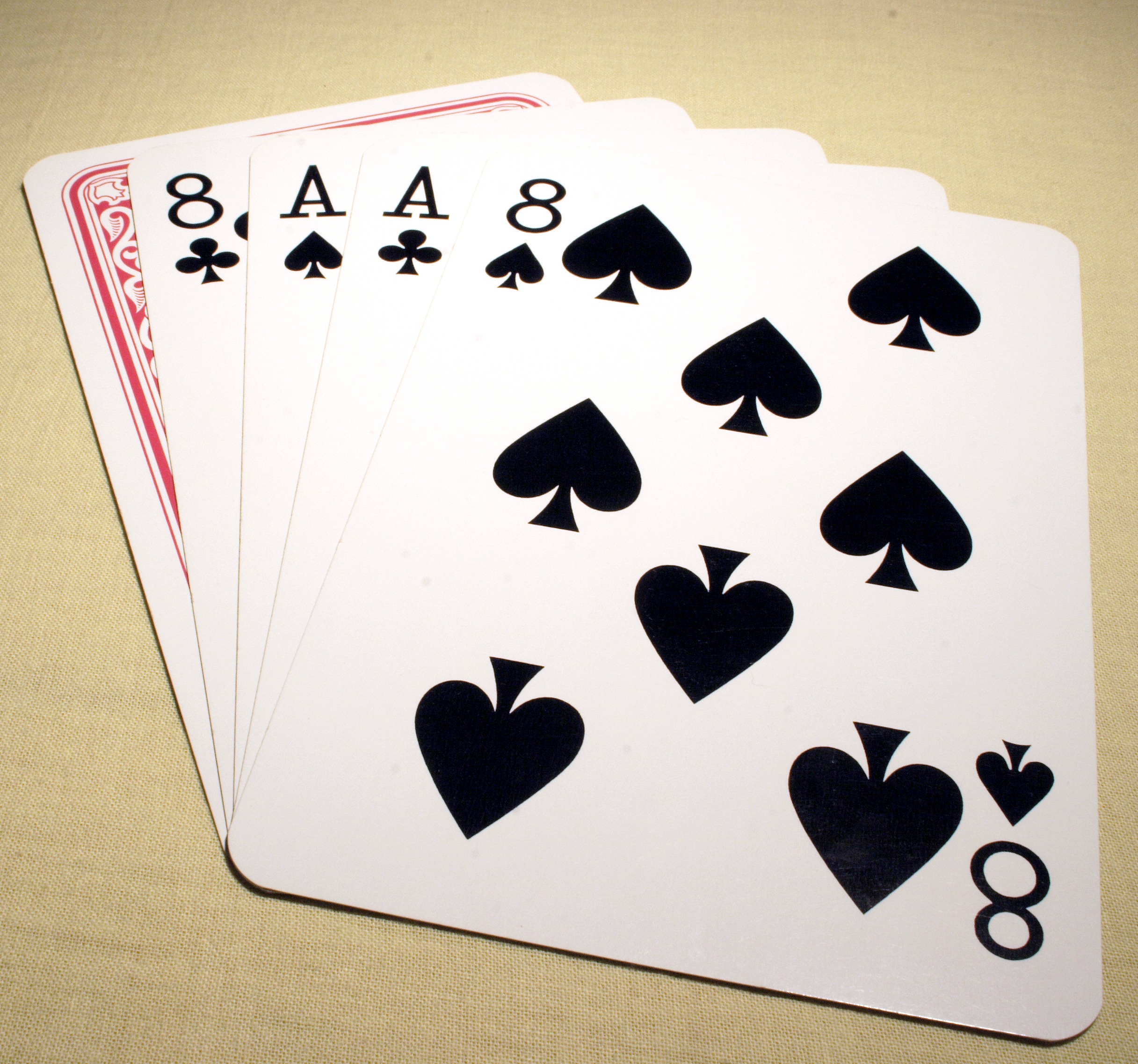
As noted above, for those who don’t know (or must be aware of), Aces & Eights has a hidden meaning for the title of their game. When Wild Bill Hickok was shot and killed in Deadwood, South Dakota in 1876, he was playing five-card draw poker. In his hand were the two black aces and the two black eights, forever known from that point on as a “Dead Man’s Hand.”

There are differing opinions on whether or not this is true, along with what the exact cards he had in his hand when he was shot and killed in Nuttal & Mann’s Saloon in Deadwood, South Dakota Territory, on August 2, 1876.

To close, Boot Hill is a fine game. The word I've used over the years is "skeletal" in terms of the rules being very bare bones.
 
What are your thoughts on the Boot Hill? 
 
NOTE: and excellent resource can be found here for nearly all of the Boot Hill products from TSR. 

Tuesday, May 22, 2012

Dragon Magazine Retrospective: My Favorite Issues and Why They Still Matter


Everyone has their “Golden Age” when it comes to Dragon magazine, and in reality it’s no different than say White Dwarf. A lot of one’s views will be dependent on just where you entered gaming. As I’ve discussed on this blog and on sites like Dragonsfoot before, I was a latecomer to 1st Edition AD&D in terms of its product run. I started gaming in 1982, but for years my friends and I really mixed and matched stuff together as we explored the game. In other words, like a lot of kids I suspect we freely mixed and matched 1st Edition and Basic and never thought twice about doing so.

So with that in mind, I really didn’t start reading Dragon on a consistent basis until well after many 1st Edition gamers would consider it to be on the decline. To me this is puzzling because around #105 things started to get really good, again from my perspective.

The run from about issue #80 till around #170 fits my style of gaming perfectly: detailing out first edition stuff (albeit late 1st) that I can easily insert into my 2nd Edition games with little or no fuss. To me there is little I have to change — it fits like a glove. 

In a no particular order here are my top ten all time favorite Dragon magazine issues with their overall themes.
 
Dragon #134 magazine cover
1. #134- Dragons - This issue is the be-all, end-all when it comes to dragons and anything dragon-related. It’s a great reference for amping up 1st Edition dragons and good dragon tactics in general. The cover is pretty cool too, a bit weird now, but still cool.
 

2. #125- Chivalry - Back in the day I played quite a number of cavaliers Dragon Magazine #125 coverand played them a lot, not for any power-gaming reasons, but more for stomping foes into the dust in the name of king and country! Being the first book I bought with my own cash

aka (Unearthed Arcana) probably had something to do with it). In terms of iconic images, there aren’t many more powerful than a knight on horseback, lance leveled. I think I wore out my copy back in the day reading and rereading this thing. Even the other articles not dealing with knights are damn cool.

As far as the cover, look at that! A historical-based Arthur, how cool is that? Couple this issue with #118 (see below), the Arthurian characters from the Deities and Demigods (Legends and Lore) from 1st Edition, and you’re well on your way to an Arthurian-themed campaign. 

Dragon Magazine #125 cover
3. #127- Call to Arms - This is just as good as #125 in my book. There is so much meat in this you need a fork and knife. Single-class fighters are probably my second favorite class after fighter/mage. When you look at the options and idea starters this gives the DM and players, you can couple this with #125 and #119 for everything one would need for a strong feudal-style campaign akin to the

Again, the cover on this is epic. I think I drew that cover multiple times as an early teen. There is so much going on. I especially love the one orc saying basically “Ok, let’s go at this one last time!”

 
Dragon Magazine #1364. #136- Urban Adventures - Damn, this cover rocks too — see a pattern here? Urban adventures are a very underutilized part of the game in my opinion and often an area where newer players simply see as a “store” to exchange stuff for stuff they want from “shop-keepers.” What #136 does is give the DM a great host of options, and the article “50 Ways to Foil Your Players” is a gem in my opinion.

If that were not enough, there is a great golem article, a very good Star Frontiers one, and a host of others. In short, you can’t go wrong with the options this issue gives you.


Dragon Magazine #1385. #138 Dreadful Tidings - This one gets special mention for two reasons: a wide selection of alternative undead types which I’ve used for years (Hungry Dead, anyone?) and the article on the plague. The rest of it is a bit skimpy, but the two articles more than make up for it. The cover isn’t bad and has a good deal going on, but for some reason it doesn’t register with me.Dragon Magazine #160 
 
6. #160- The City Never Sleeps - Tie this in with #136 and you’ve got everything you need for down-and-dirty city creation and defenses in a magical world. Thieves guild articles and others fill out the special section nicely. I especially like the maps of the Inn of the Last Call.

For issue #160 the cover is okay, not my favorite, but okay. The real meat in this one is the articles.

7. #123- Arcane Arts - This cover sets the tone and is a great tool to use for the magically inclined characters of the campaign world. The special section has three outstanding articles and the Arcane Lore section with fire-related spells is fantastic. Of special note is the idea of the “Arcane College,” a great tool for DMs to use when PC mages get to higher levels.

Legends and Lore has Oriental heroes and the Marvel-Phile section has some of the heralds of Galactus.

Dragon Magazine #118 cover
Dragon Magazine #123 cover 8. #118- Competitions and Tournaments - Tie this into #125 and Arthurian Britain (legendary, not quasi-historical) and away we go. Ever wonder about how to stage a tourney? Wonder no more — follow the pointers in this section and you’re well on the way to a good framework for a fair, festival, or what have you. Also consider the article “The Fairest of the Fairs” (#137) in conjunction with this issue for further idea kick-starters.

Some folks will not like this issue as it contains the infamous article heralding the coming of 2nd Edition by Zeb Cook — who makes the cut in terms of classes and who doesn’t… I’ll leave it at that to cut down on the rancor. Personally, I think Zeb did a great job given the circumstances.

This cover is awesome and the last of the great chess series that ran for years by the artist Denis Beauvais.

Dragon Magazine #116 cover9. #116- Maritime Adventures - 

Long before “Of Ships and the Sea,” I used this issue to great effect as it covers everything needed for ships and sailing in a fantasy setting. As I got older I still liked the idea behind it, but I’ve never liked the idea of Ships of the Line akin to HMS Victory in a world of high medieval tech. To me a cog or at most a caravel represents the levels of seaborne tech for most worlds. And for me a caravel would be on the high side of maritime technology.

The cover is what it is: a picture of a red dragon mini with some smoke effects added. Nice, but not great.

The whole issue is great by my estimation and there really isn’t a bad article in it.

Dragon Magazine #106 cover

10. #106 - This was tough as I’m tempted to pick the likes of #115, #145, #148, #167 or #178. I give the nod to #106 solely based on the strength of the article “A Plethora of Paladins.” The Illrigger alone is so cool you can’t go wrong with it, and the class has featured in my 2nd Edition games.

In fact, it was the Illrigger that made me reevaluate kits and dump them emtirely much from my 2nd Edition games. I find most of the NPC classes work just fine in 2nd Edition and you can easily use them with the likes of “Sages and Specialists,” which are more akin to NPC classes in presentation anyway.

The cover…while not a "chain mail bikini" it’s starting to get close.

Honorable mention / runner-up status goes to the likes of #99 (for the expanded sword system and troop tables), #102 (Anti-Ranger), #119 (Druids), and #124 (Airborne Adventuring). The cover of #119 is especially awesome! #126 is another favorite of mine, especially for the cover.

These issues for me were the “sweet spot” of gaming articles and heavily influenced my gaming and my perception of the game. It probably also explains why, to some degree, 2nd Edition became such a non-issue to me. My group and I were already mix-and-matching the various gaming systems for years. When 2nd Edition came out we continued to do so.