Search This Blog

Sunday, August 12, 2012

My 10 Favorite Westerns of all Time

Fueled by my growing re-interest in the Old West in general I’ve been either watching for the first time or re-watching many Westerns. My dad is a big fan of them and I watched quite a few in my youth/teens with him and then drifted away to other pursuits. As I noted in my post about Boot Hill I never played it since we were so focused on D and D. With my reawakening of Westerns my thoughts
have turned to western themed RPGs and my favorite westerns of all time


My list is not going to be to everyone’s taste and since I was born in a decade where they were decidedly on the decline (the 70s), my list will reflect my age. If I were to ask my Dad I’m sure his will be different with some being the same; some are timeless. So without further delay, this time in reverse order, my top 10 favorite Westerns of all time. 

#10 Open Range- This will surprise many people I think, but it’s actually quite a good movie. Kevin Costner and Robert Duvall are great in this movie as is Annette Benning. In a few places the movie wanders off script in terms of logic and consistency, but for the most part tells a very good story of the end of the open range and the rise of the cattle barons. In fact the end of the open range was one of the defining moments of the Old West.

Costner’s character Charlie is not an anti-hero per say, but a man troubled by his past. When it comes to gun fighting however Charlie is more akin to an Old West version of Liam Neeson’s character in Taken. He just goes to town and obliterates everything in sight.

While some might see it as contrite the budding romance between Costner and Benning’s characters is a good representation of how people approached courtship in the 1800s: stilted, awkward but well meaning.

#9 Silverado- This is my guilty pleasure movie as far as Westerns, but you can’t go wrong with the cast, it’s damn impressive: Kevin Kline, Brian Dennehy, Jeff Goldbloom, Scott Glen, Kevin Costner, Danny Glover, Rosanna Arquette, John Cleese and many more. It seems that ensemble cats work well in westerns and Silverado certainly has the right actors. 

Silverado is a throwback to the traditional western tales after the revisionist’s westerns of the late 60’s and 70s. The tale is fun; you care about the good guys and actually want them to win. The fact that the movie is well shot, directed and done well in terms of cinematography just add to it. The final gun battle at the end has so many great scenes it’s hard to not like this movie.

#8 A Fist Full of Dollars- “My mule don’t like people laughing at him, gets the funny feeling they’re laughing at him” and “My mistake…. four coffins.” Those two lines are some of the best lines ever uttered in a movie, let alone a Western. Fist Full of Dollars is awesome! Oh yes, “The Man with no Name”, is a pretty cool moniker.


 #7 True Grit- If I had to pick just one John Wayne film it would be this one. His portrayal of Rooster is great! Some might not like it because its John Wayne, playing John Wayne, but I liked it well enough.

#6 Dances with Wolves- Surprisingly Costner makes the list again, but this movie is impossible to ignore in the Western genre. It’s telling that it’s a great story that has nothing really in common with other westerns, mainly focusing on Indians and Lt. John Dunbar’s interactions with them. In other words it’s a story that happens to take place in the west.

Dances is a visual and auditory masterpiece with sweeping vistas and scenery and magnificent soundtrack to accompany it. The majesty of Dunbar’s first ride through the plains with the “John Dunbar theme” playing is cinematic gold.

The movie and its characters span the range of human emotion: despair, loneliness, hope, friendship, love, hate, madness, pragmatism, and laughter.

Perhaps my favorite scene of the movie is the one where the old Indian chief pulls forth a Spanish conquistador helmet when he and Dunbar are talking about the coming of the white-man. The chief says this was from the time of his grandfather’s grandfather; implying that the Indians would survive this too. The viewer gets a great sense of sadness knowing that the Chief doesn’t know the tidal wave of settlers that is coming. Costner (the director too) side steps this by having the Indians leave their winter camp before the Army arrives. He then wisely ends the movie then and there, but sadly tells the story of the end of the Indian way of life as the end credits roll.

In short Dances with Wolves is nothing short of breathtaking.

#5 HighPlains Drifter- A Clint Eastwood western with a touch of supernatural? Yes please. High Plains Drifter is a great story because the real villains in the movie are the townspeople themselves that the Drifter is there to defend. They are villains because the townsfolk murdered the Sheriff. Time goes by and the mysterious Drifter appears in town. It is alluded to (but never said definitively) that the mysterious Drifter is the sheriff having returned from the grave. Drifter is one of those movies that makes you think, especially at the very end when the Drifter rides away from Lago at the very end with the midget working on a tombstone that you can’t see what is inscribed on it. The midget says he doesn’t know the Drifter, to which the Drifter replies, “Yes, you do” and it shows the tombstone of Joe Morgan, the murdered sheriff.  

#4 The Searchers- This is widely regarded as the greatest western of all time and was registered as culturally significant by the Library of Congress in 1989. That alone says something. Additionally the American Film Institute named it as the greatest Western of all time in 2008. Directed by John Ford, starring John Wayne, and Natalie Woods the Searchers is THE Western for the older demographic. My own memories of it are hazy as I think I may have watched it one time only. It’s already at the top of my list to rewatch. Because my recollections are dim I’m looking forward to this one, as it will be like watching it for first time.

#3 The Good,The Bad, The Ugly- Out of the three in the Dollars Trilogy, the Good, The Bad, and the Ugly is by far the best. That’s not to say that the others a Fistful  of Dollars and a Few Dollars more are bad, its that The Good, The Bad, The Ugly is that good.

The twists and turns of the movie leave you at the edge of your seat as the movie traces Tuco (the Ugly) and Angel Eyes (the Good) pursuit of $200,000 in Confederate gold. The Mexican standoff at the end with the soaring score is likewise impressive as is the ending.

#1B Tombstone- It’s very tough to not list this movie and number 1, so I think of it as 1B. This movie is perhaps the finest retelling of the legendary gunfight at the OK Corral in Tombstone Az, on October 26th, 1881. The previous “standard” was the Battle for the Ok Corral in the 1950s that left a lot to be desired.

The gunfight and the Earp Vendetta ride was THE event of the West, even with the myth that surrounds it so it’s fitting that this movie is at the top of the heap. Tombstone features an ensemble cast of Kurt Russell, Powers Boothe, Val Kilmer, Michael Biehn, Sam Elliot, Bill Paxton, Billy Bob Thornton, Stephen Lang, Jason Priestly and Charleton Heston amongst others. But it is the acting
of Kilmer as Doc Holliday that steals the show. Doc as Wyatt would recollect later “was the deadliest, fastest, nerviest man I ever saw”. The whole movie touches on almost every part of the Earp/Cowboy war and where it takes liberties it does a good job making them plausible and seamless.


The telling also does well in presenting a fairly balanced view of the Earps. The Earps were canonically the “good guys” but their dealings in town says otherwise. The Earps weren’t necessarily the good guys and the cowboys weren’t necessarily the bad guys. The fact that event in the events of 1881 people on both sides were split in their loyalties.

The actors, particularly Russell, do a great job with the dialogue making it seem that you are actually in 1881. With all this in mind Kilmer as a menacing, Latin quoting stone cold killer with a southern drawl did the best acting as Doc Holliday. Closely behind him is Biehn’s portrayal of Johnny Ringo.
Going hand in hand with this is the cinematography since it was actually shot in Arizona.

#1A Unforgiven-  Of all of Clint Eastwood’s westerns, which are considerable, this one stands head and shoulders above the rest. Forget for a moment that this won Academy Awards (earning Eastwood Best Director) think of the script itself. Eastwood sat on it for 25 years so he would be just the right age to play William Munny. Now normally I don’t like anti-heroes who are anti-heroes for the sake of it, but Munny is cut from a different cloth: a man who was a drunken, stone cold killer whose acts include “dynamiting the Rock and Island in ‘69 killing women and children.” Let that sink in for a minute. So when he comes out of retirement for one more job, he’s doing it for the sake of his kids. Of course he’s coming out of retirement to kill two men who cut the face of a prostitute.

The cast of this movie is epic: Eastwood, Gene Hackman, & Morgan Freeman. Those three
alone make it a great. The interplay of William (Eastwood) and Ned (Freeman) is what makes the movie, then it shifts for the final scene where Munning takes it to Little Bill.


From the story side of the tale the best part about it is that the main characters are being contrasted by WW Buechamp’s writings throughout the movie with the mythological west and its events. In other words the how’s and what’s of what really happened and how they were reported or perceived being two different things. Hackman’s Little Bill is menacing without being over the top; a hard man who
utters some immortal lines, but none better then “Hell I even thought I was dead, turned out I was just in Nebraska.”


The final scene is perhaps the finest scene of cinema related to a Western, they don’t get better then this:


Honorable mention goes to the likes of Pale Rider, Hang em High, Little Big Man, Outlaw Josey Wales, Once Upon a time in the West, and Two Mules for Sister Sarah. There are plenty of great westerns and it’s a shame that the current regimes in Hollywood has rendered them as “already been done”. From what I understand the remake of True Grit and the movie Appaloosa are worthy westerns to see.


Thursday, July 12, 2012

The “other” Heroes of the Battle of the Bulge

The “other” Heroes of the Battle of the Bulge
(I should preface this with how big a supporter of the military I am. I had a grandfather serve in WWII and am justifiably proud of his accomplishments. I read Band of Brothers multiple times and I am a great admirer of Stephen Ambrose's writing in general. But something struck me as wrong when one considers the subject of this post and when one contrasts it with the 101st Airborne.)
Ask most anyone 40 years and younger about the 101st Airborne and especially those who play Call of Duty in its various incarnations and they can probably tell you chapter and verse on Easy Company, 501st PIR. Ask them about who the 106th Infantry Division is or what they did and most couldn't tell you much past the Wiki entry.

I'll try to draw everything to together here, but you'll need to stay with me. Much like Captain Charles Butler McVey III, Captain of the USS Indianapolis, the 106th Infantry is a prime example of the flip side of glory in World War II. If the 101st Airborne represents everything that the US did right in WWII in terms of training, the 106th Division represents everything that it did wrong. In no fault to the men who served in it either, but when you contrast this with the statements of the 101st veterans in terms of their elite status compared to the draftees...well you are looking at World War II through two VERY different lenses.
 
The exploits of the 101st are something akin to legend now, it serves no purpose rehashing them so I won't and again I'm not writing this to disparage them. In fact I'm not sure even the US Army was to blame for the fate of the 106th in late December 1944. If anything, its a case of circumstances that weren't apparent at the time and the US doing what it could to plug combat loses that it was ill-prepared for.

The 106th was in trouble from the start. Battlefield causalities in World War II were horrific and on a scale that could not be imagined by US military planners. Army Chief of Staff George Marshall wanted nearly 213 divisions for fighting World War II and he got somewhere around 90. As a result when causalities mounted the army did as best as they could by shipping out men from the divisions training stateside, this stripped away around 60% of the 106th manpower. The problem became that the divisions were often left under-strength went the finally did reach combat or at least deficient in areas such as the NCOs and junior officers.

The problems of training aside the 106th was also headed into the largest battle of the Western Front, the Battle of the Bulge. Obviously it was not known prior, but the countdown is like a recipe for disaster:
  • 106th arrives in England in the Fall of 1944 (11-17-1944)- trains for 19 days
  • Crosses to France (12-6-1944)
  • Moves to Belgium (12-10-1944)
  • Battle of the Bulge begins (12-16-1944) and the 106th is directly in harms way.
In the center the lines were held by two regiments of the 106th the 422nd and the 423rd.
Now here is the part that sticks out. Was the 106th any “less brave” then the 101st? Hardly; the stand around St Vith should be mentioned along with Bastagone, but yet it's not. The 101st is famous for saying “We didn't need rescuing.” Anyone care to debate the wisdom of that? Of course they did, its more of no one wants to be the ones hunkered down in the fort, they want to be the ones riding in with the cavalry. This brings me to one of the moments in the Band of Brothers (in the book and TV mini series) that rankles me the most: the depiction and disdain that the 101st has for the retreating US soldiers at the Battle of the Bulge. Point being that the 106th was the polar opposite from the 101st in morale, training and in every way imaginable. Now there is no way that the members of the 101st could know that the training that these troops received was on the opposite end of the spectrum from themselves, On top of that they trained as a cohesive unit for nearly two years, the 106th was parceled out to back-fill other divisions in the Army.

In a sense its not even the Army's fault per say; the questions of manpower requirements to fight World War II were made at even higher levels. Possibly presidential with an eye to keep enough men to work in the factories on the home-front?
 
In any even it is a disservice in my eyes to glorify the 101st so highly. Were they brave? No doubt. Were the men who served in other units besides the 101st brave? Again, I have no doubt. But, to so lionize the efforts of the few against the whole gamut of the army does a disservice to every man who served. The 106th is a forgotten page in history, but an important one. But for a twist of fate it could have been the men of the 101st hurled back by the German juggernaut.

For more reading take a look at the magazine “Armchair General- American Tragedy: 106th Infantry Division's Battle of the Bulge." January 2012 Issue, article by Jerry D Morelock, PhD and Editor in Chief.
In closing I have tremendous respect for all of our veterans of the Greatest Generation. The point needs to be made that TV and even the recollections of the 101st don't tell the true story of what the 106th went through.

For details on the 106th history, check out this excellent website: http://106thinfantry.webs.com/historyofthe106th.htm

Monday, July 2, 2012

Twilight 2000 RPG


Time to review and reflect on another of the games that I played as a teenager but this time, sadly no longer have the books for: Twilight 2000. This offering by Games Designer Workshop is a great, great game with a gritty realism. For some reason out of all the games I had back in the day I sold these… and I can’t really remember why I did either…. ahhh foolish youth.

For those not in the know the game covers the events of World War III starting with the (then) current timeline of the late 80s and the Cold War. From there it branches off to the start of a Sino-Soviet war and then a war breaking out in Europe between the Warsaw Pact forces and NATO. “limited” Nuclear exchanges happen and the war spreads to form a truly world war as industrial capacity breaks down, food becomes scare and command and control of the various armies disintegrates. The conflict grows and eventually engulfs most of North America from invasion from the south. In short the shi* hits the fan everywhere.

The players are cast in the roles (most often) of US Army soldiers trying to survive the falling apart of their unit/division as they are left to fend for themselves. In most cases the main overall theme is to try and make it back to western Europe and get a transport back to the US.

Two main points  stick out in my mind from my time playing Twilight 2000: One, combat is downright deadly as would be imagined. Body armor helps, but not enough if the hit happens in the right location. Because of this we were never that attached to our characters, because death was too common of an occurrence. This is the biggest departure I think that players of Fantasy RPGS struggled with. Armor is there but doesn't save you like in D&D. Plus there aren't any clerics to reattach your severed arm...

Two, we quickly learned the value of two weapons standing out in my mind nearly 20 years late. For close in combat nothing beat the H&K CAW (Combat Assault Weapon), an automatic shotgun. We learned through a few characters to sling the M-16A2s, kick down the CAWs and blast everything whether friend or foe. This was of course after hurling grenades into said location.

Speaking of which we learned that even better then using a CAW at close range was using a M-19 grenade launcher from a distance was even better. We would stand back and fire from our vehicles at a target only venturing after the smoke had cleared.

Another interesting point is the scarcity of gas/diesel. Stills offset this (ours seemed to get shot up regularly) and we learned to leave it camouflaged and go back to it after the firefight.  We have a couple of HMMVs and once had a LAV-25. Problem was the LAV became a burden, as it required so much fuel. Better yet was when we got FAVs (with M-19 grenade launchers ‘natch). Ac much fun as it would have been for the larger vehicles, speed was much better. This represented the setting well as only large installations with a logistical support could field tanks. Which even with a few TOWs or other rocket systems we avoided fighting.

Equipment lists and weaponry was up-to-date as of the early 90s and would need some updates if you played the 1st edition rules. The supplements to the game like the Small Arms guide and Vehicle Guides were excellent. Which brings up a related point, trying to figure out vehicle combat was overly complex and frustrating as it gets in a game.

In terms of characters, none were memorable except one that I played a tournament where the GM ruled that a flash bang grenade had blown off my Welsh gunner’s leg??? Mind you I was on the outer edge of the effect radius. Basically he didn’t understand the rules or what the type of grenade did. That incident along with some neckbeard historical gamers at the same Con turned me off to gaming with the general gamer population, certainly at Cons.

The character creation process was good and flowed well allowing for various nationalities, genders, and AoR of the service branches. Rank is hardly an issue as outside of your own squad NCOs and Officers can’t just boss you around: the army is falling to pieces and command and control is non-existent.

I only had minimal experience with the 2nd Edition rules as we took our characters from first and tried them out. Later on we used the 2nd edition rules in modern day (brush fire wars type of Earth) rather then the World War III angle before GDW did it. We jetted around in our LeerJet for the highest bidder. Not much came of that and college beckoned for all of us shortly thereafter. Not long after college, GDW folded in 1996.

They only other thing that I think did not work well in the game system are the Hesitation rules. Basically everyone had a factor where it governed (more or less) your actions in a firefight and hesitations required pauses reflecting the PCs ability to keep it together in a firefight. While realistic it was also a drag on the game where you had to wait while everyone else is doing something. One lucky role during the character creation process and you were infinitely better in combat then your foes or teammates. If you are like me and roll crappy for your PCs (that’s any system) then this was a source of frustration for you as well.

Summation: The entire line was well done with very good artwork and an abundance of supplements. We never used the modules all that much, but there certainly was a wide range of them.

In short a great game, lots of fun, just don’t play it if you can’t handle the concept of your character dying because the likelihood of it if you go into every combat like it’s D&D is very high.

Sunday, July 1, 2012

3rd Edition Warhammer Siege

-->
"Such a cool cover for such a flawed book."
Ahh the good old Warhammer Siege supplement for 3rd edition Warhammer Fantasy Battle, was there ever something so promising, but ultimately unplayable? When I was in High School I can’t begin to tell you how much we looked forward to playing this, how much effort we put into creating stone throwers, siege towers, drills, sheds, catapults and other siege equipment to say nothing of the scratch built castle I made that was huge. I don’t think there has ever been a bigger let down in the history of man… ever. I don’t say this lightly either. Read on to find out why.

My friends and I: (Dave and Jeff)  spend a great of time playing Warhammer 3rd edition in 1989-92ish with a fair amount Warhammer before college beckoned in the Fall of 1991. We were all pretty well versed in the rules and how it played by then and were looking forward to the new challenges that Siege offered. We had progressed rapidly from Warhammer Fantasy Role play, to Fantasy Battles to Siege. Each of us had large armies and were some of GWs biggest fans this side of the Pond.

As mentioned above we got our supplies, armies and terrain together and gathered in the basement of Dave's house. I think we prepped for several days before the game actually began, (incidentally Dave's ping pong table was perfect for a Warhammer table). We pointed out our respective armies, Jeff playing his Orc and Goblins were the defenders of the castle and I was playing my Empire army as the attackers. (I recall we rolled randomly to see who attacked and who defended). After noticing some interesting loopholes (I had units of Landerstrum (levies)) that I never intended to bring onto the main board continuously in the remote zones scavenging for supplies to reduce my point costs) is one that came to mind. Mind you I didn't actually have the models either, but they were never coming on the board. We finally go the main game rolling.

I'm not going to bore you with half recollections but skip to the meat of this post.
 
Finally the strategic phase, foraging, strategic time etc was over  and we got to firing. Now in order to save points I had skimped on ammo for the siege weapons figuring I could scavenge for them. We looked through the rules and nope, no go. I was horrified: I had made such a huge blunder. You can forage for supplies but not ammo. Immediately, one thought: do I have enough ammo. As it turned out I had plenty. (Makes no sense for stone throwers, but I digress). I tried to hide it and grabbed for my dice. Reluctantly I have my catapult fire: it launches and it does middling damage to the wall its facing. Next up the 10-man cannon with barely any ammo. I figure that I’m not going to have enough ammo to do anything to the castle and will have to fall back on a futile ladder and ropes assault.

The dice roll a pretty good result, we then flip to the section with wall damage and look on in horror as one shot blows away the section of wall firing and does so much damage that the secondary collapse blow up the entire facing to say nothing of the orcs that it vaporizes in the resulting collapses. 

We then stare at each other dumbfounded. Did that really just happen? Did we miss something in the rules?

I can’t stress this enough, the three of us literally stopped the game, looked at each other then we huddled around the rulebook, looking at the relevant rule sections. Now the three of us had each taken turns reading and it's still "what the Hell?" We also figured we had the rules down pat, but, nope. We had read the rules right and the castle wall was history from one -shot.

A nano-second later we all come to the same conclusion. Did they play-test this at all? And that pretty much ended that game right there. We tried a couple more scenarios and the results were pretty much the same.

What a disappointment, one of the greatest of my 30 years of gaming.

We weren’t into 40K so we never tried the 40K rules for it. One would imagine that if gunpowder weapons could blow up a fortification with one shot then what lasers, bombs, siege dreadnoughts, etc would do to it. Sure the energy fields might have made them last a tad bit longer, but ugh, who wants to game that out?

So that was my first pretty much only brush with Warhammer Siege and it sticks out in my mind like a sore thumb. The rules could not have been conceivable tested in anyway shape or form. It’s probably fitting that the large (as in 3 foot castle), counters, siege engines and the like are mostly long gone now. It would be too painful to look at the time and effort put in for such an enormous let-down. Certainly a low point of me in terms of gaming.

Tuesday, June 26, 2012

Boot Hill, one awesome RPG

There are some great Role-playing Games out there that I've known about for years, but never played, and this is about one of them.

Anyone remember those “Gateway to Adventure” advertisements that came in the D&D boxed sets? In my case, mine came via one of my Christmas gifts in 1982 from an Aunt: the Moldvay boxed set of Dungeons and Dragons Basic. The box and the advertisement are long since gone (still have the rules), but the memory of looking through them still linger on, sort of like looking through Sears and JC Penney catalogs as a kid to look at the toys. I would pour over it looking at all of the cool ads for games from TSR in addition to D&D, the blurbs for Gangbusters, Gamma World, Boot Hill and Top Secret. Out of them I only played Gamma World a bit as we mainly focused on D&D and AD&D as kids.

A few weeks ago I was thinking of that old ad and I started thinking about Boot Hill. Out of all of those old games the only one I never read through was Boot Hill. So I got a set of rules and was surprised by two main things as I read the rules: 1) the combat system (rightly) is deadly and 2), the system is rules lite and more Spartan then OD&D.  As I get older crunchier systems fall by the wayside as gaming time is a finite commodity at this stage of my life. While Aces and Eights* (See below) and Deadlands are interesting (and I like the Savage World rules) I’m less inclined to invest in them, mainly from a time perspective.

"One bad-ass movie."
Boot Hill on the other hand is fast and furious and has a lot of possibilities. (Yes, I know that’s what Savage Worlds says, but I’m not talking about that rule set right now!) The other interesting aspect because the rules are 34 pages the possibilities are wide open. For source material there is more then a person could ever hope to read/watch in their lifetime. For my own part I’m slowly collecting the Time-Life Book series from the 70s/80s “The Old West”. There are 26 volumes so I have a long way to go, but there are many more sources. For further inspiration there are movies, movies and more movies. Owing to the fact that I was born in 1973 I’m not as big of fan or the serial westerns or 30-50’s stuff. I’ll probably get there, but I’m more in the mold of Clint Eastwood in High Plains Drifter, A Few Dollars More, Fist Full of Dollars, Outlaw Josey Wales, Pale Ride and of course Unforgiven. I’m also partial to Dances with Wolves, Tombstone and Open Range. For classics John Wayne is OK (True Grit), but the likes of Burt Lancaster and Kirk Douglas in westerns appeal to me more. I mean is there a better ending to a movie then this:

Probably not unless you are talking about the awesome Tombstone that has way too many great scenes to count; this one in particular is epic:

So in reality what more could you ask for? A fast and lite system for gunfights and a very open rule set that you can combine with AD&D as needed. Some people dislike the 1st/2nd edition rules saying that there isn’t much for campaign play, they’re right, there isn’t and that’s the beauty of it. The way I look at it the more open the better and its not like there is no material on the American Old West as I mentioned above. For me if I run a game of Boot Hill I’d modify the skills from 3rd edition for use in 1st/2nd, after that the sky is the limit. Think of the great western films: most of the action is against factions, against people and their interactions. So it takes a different mindset to play because its not “open door, kill monster, take treasure.” Sure you could do that and it’s probably not a bad idea for training wheels at the start. But after a while it gets more episodic.

Where I differ is that the times I’ve seen or read about people mixing the two genres it’s usually AD&D with some Boot Hill. Imagine a campaign of Boot Hill with a minimal amount of AD&D, or none at all; if I ran a game of Boot Hill that’s what I’d aim for.

I also read about a great house rule for Boot Hill on a forum (forget which one, might be the ODD Boards): if your character dies you have to go to the kitchen and roll up a new one. If you get him completed before the action is over you can reenter the same gunfight! Sounds like FPS players will like this as a “respawn”.

In closing Boot Hill looks like a great system, it’s also cool to see that TSR’s advertisement worked on me, 30 years after the fact!

As a side note there are places to discuss Boot Hill on the web like the ODD Boards.

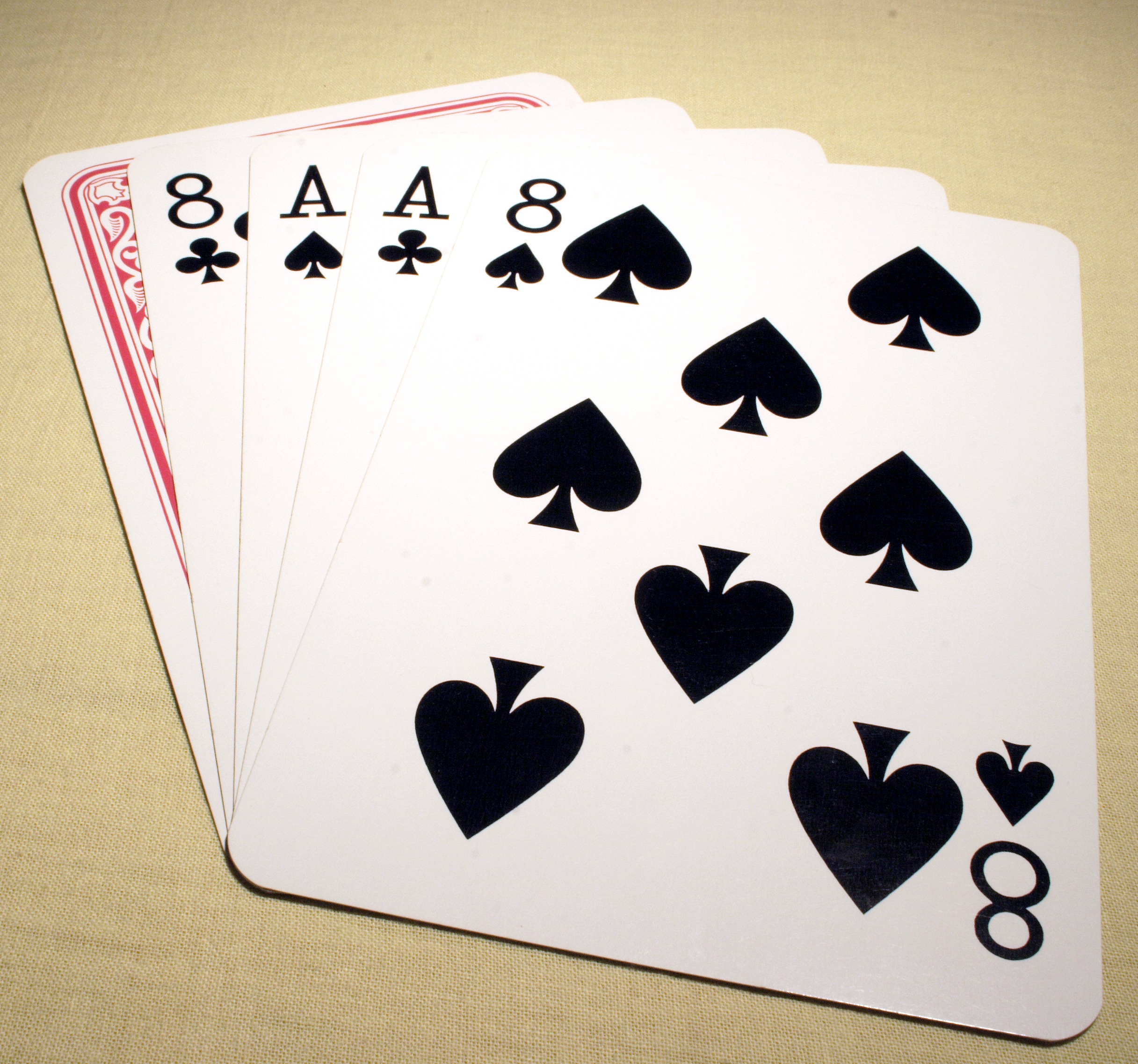
* Lastly, for those who don’t know, Aces and Eights has (must) be aware of) a hidden meaning for the title of their game. When Wild Bill Hickok was shot and killed in Deadwood, South Dakota in 1872 he was playing 5-card draw poker. In his hand were the two black aces and the two black eights, forever known from that point on as a “Dead man’s Hand.”


Tuesday, May 22, 2012

My "Golden Age" of Dragon Magazine


Everyone has their “Golden Age” when it comes to Dragon magazine and in reality it's no different then say White Dwarf. A lot of one's views will be dependent on just where you entered gaming. As I've discussed on this blog and on sites like Dragonsfoot before, I was a late comer to 1st Edition AD&D in the terms of its product run. I started gaming in 1982, but for years my friends and I really mixed and matched stuff together as we explored the game, in other words like a lot of kids I suspect we freely mixed and matched 1st Edition and Basic and never thought twice about doing so.
So with that in mind I really didn't start reading Dragon on a consistent basis until well after many 1st edition gamers would consider Dragon to be on the decline. To me this is puzzling because around #105 things started to get really good, again from my perspective.
The run from about issue #80 till around #170 fits my style of gaming perfectly: detailing out first edition stuff (albeit late 1st) that I can easily insert into my 2nd edition games with little or no fuss. To me there is little I have to change, it fits like a glove.
In a looser order here are probably my top ten all time favorite Dragon magazine issues:
1. #134- Dragons. This issue is the be-all, end-all when it comes to dragons and anything dragon related. It's a great reference for amping up 1st edition dragons and good dragon tactics in general. The cover is pretty cool too, a bit weird now, but still cool.

2. #125- Chivalry. Back in the day I was a huge fan of cavaliers and played them a lot, not for any power-gaming reasons, but more for stomping foes into the dust in the name of king and country! Being the first book I bought with my own cash (aka Unearthed Arcana probably had something to do with it). In terms of iconic images there aren't many more then a knight on horseback, lance leveled. I think I wore out my copy back in the day reading, and rereading this thing. Even the other articles not dealing with knights are damn cool. As far as cover, look at that! A  historical based Arthur, how cool is that? Couple this issue with  #118 (see below), the Arthurian characters from the Deities and Demigods (Legends and Lore) from 1st edition and you well on your way to an Arthurian themed campaign.

3. #127- Call to Arms. This is just as good as #125 in my book. There is so much meat in this you need a fork and knife. Single-class fighters are probably my second favorite class after fighter/mage. When you look at the options and idea starters this gives the DM and players you can couple this with #125 and #119 for everything one would need for a strong feudal style campaign akin to the Hundred Years War or a least a mythological one.
Again the cover on this is epic. I think I drew that cover multiple times as a early teen. There is so much going on. I especially love the one orc saying basically “Ok lets go at this one last time"!

4. #136- Urban Adventures. Damn this cover rocks too, see a pattern here? Urban adventures are a very under utilized part of the game in my opinion and often an area where newer players simply see as a “store” to exchange stuff for stuff they want from “shop-keepers”. What #136 does is give the DM a great host of options and the article “50 ways to foil your players" in a gem of an article in my opinion.
If that were not enough there is a great golem article, a very good Star Frontiers one and host of others. In short you can't go wrong with the options this issue gives you.

5. #138 Dreadful Tidings. This one gets special mention for two reasons: a wide selection of alternative undead types which I've used for years (Hungry Dead anyone?) and the article on the plague. The rest of it is a bit skimpy but the two articles more then make up for it.The cover isn't bad and has a good deal going on but for some reason it doesn't register with me.

6. #160- The City Never Sleeps. Tie this in with #136 and you've got everything you need for down and dirty city creation and defenses in a magical world. Thieves guild articles, and others fill out the special section nicely. I especially like the maps of the Inn of the Last Call.
For issue #160 the cover is ok, not my favorite, but ok. The real meat in this one is the articles.

7. #123- Arcane Arts. This cover sets the tone and is a great tool to use for the magically inclined characters of the campaign world. The special section has three outstanding articles and the Arcane Lore section with fire related spells is fantastic. Of special note is the idea of the "Arcane College", a great tool for DMs to use when PC mages get to higher levels. 
Legends and Lore has oriental heroes and the Marvel-Phile section has some of the heralds of Galactus.
 8. #118- Competitions and Tournaments. Tie into #125 and Arthurian Britain (legendary not quasi-historical) and away we go. Ever wonder about how to stage a tourney? Wonder no more, follow the pointers in this section and you're well on the way to a good framework for a fair, festival, what have you. Also consider the article “The Fairest of the Fairs” #137 in conjunction with this issue for further idea kick-starters.

Some folks will not like this issue as it contains the infamous article heralding the coming of second edition by Zeb Cook; who makes the cut in terms of classes and who doesn't... I'll leave it at that to cut down on the rancor.Personally I think Zeb did a great job and the grogs can go stuff it.

This cover is awesome and the last of the great chess series that ran for years by the artist Denis Beauvais.
9. #116- Maritime Adventures. Long before “Of Ships and the Sea” I used this issue to great effect as it covers everything needed for ships and sailing in a fantasy setting. As I got older I still liked the idea behind it, but I've never liked the the idea of SoL akin to HMS Victory in a world of high medieval tech. To me a cog or at most a caravel represents the levels of seaborne tech for most worlds. And for me a caravel would be on the hogh side of maritime technology.
The cover is what it is: a picture of a red dragon mini with some smoke effects added. Nice, but not great. 
    The whole issue is great by my estimation and there really isn't a bad article in it. 
    10. #106. This was tough as I'm tempted to pick the likes of #115, #145, #148, #167 or #178. I give the nod to #106 solely based on the strength of the article “A Plethora of Paladins” The illrigger alone is so cool you can't go wrong with it and the class has featured in my 2nd games. In fact it was the illrigger that made me reevaluate kits and dump them pretty much from my 2nd edition games entirely. I find most of the NPC classes work just fine in 2nd and you can easily use them with the likes of “Sages and Specialists” which are more akin to NPC classes in presentation anyways.
     The cover... while not a "chain mail bikini" it's starting to get close...
Honorable mention/Runner up status goes to the likes of #99 (for the expanded sword system and troop tables) #102 (Anti-Ranger), #119 (Druids) and #124 (Airborne Adventuring). The cover of #119 is especially awesome! #126 is another favorite of mine especially for the cover.
These issues for me were the “sweet spot” of gaming articles an heavily influenced my gaming and my perception of the game. It probably also explains why to some degree 2nd edition became such a non-issue to me; my group and I were already mix and matching for years the various gaming systems. When 2nd came out we continued to do so. ­

Sunday, April 8, 2012

Tomorrow is gone, time to start really funding NASA

Truer words were never spoke and Neil deGrasse Tyson speaks them perfectly.

The next time you hear someone ask "why are we spending so much money on X rather then problems on Earth". Slap them upside the head.  The Us government spent more on TARP then the entire 50 year budget of NASA. The US government spends more  each year on Health Human Services & and social programs such as Medicare and Medicaid then the entire US defense budget! In short NASA's funding is ridiculously low.

Time to start dreaming again America, time to reach for the stars again. Thanks Neil deGrasse Tyson for pointing that out to us, perhaps someday soon we'll start reaching for them again.